








Key Takeaways
-
Garage door companies lose revenue when dispatch, inventory, quoting, and invoicing rely on manual phone trees and re-keying.
-
Emergency spring calls, on-site estimates, and truck stock checks must move in real time to avoid second trips and unhappy customers.
-
Team-size needs change quickly: a 6-tech shop can often manage with basic tools, while 15-plus techs require integrated workflows and inventory tracking.
-
Essential features include truck inventory management, on-site estimating from a price book, and two-way QuickBooks Online sync that preserves corrections.
-
FieldPulse delivers these capabilities for established garage door teams of 7 to 50 technicians with ClearPath workflows, bilingual mobile support, and phased onboarding.
See How FieldPulse Handles Your Garage Door Workflow
What a Garage Door Company’s Week Actually Looks Like
Garage door work runs on a mix of job types, and each one moves differently through your process. A typical week includes several job types, each with different demands:
-
Emergency spring and cable repairs: high urgency, quoted on the doorstep, and dependent on parts availability.
-
Opener replacements: diagnostic on arrival, good-better-best options, often upsold from a service call.
-
Full door installs: lower volume, higher ticket, and tie up a truck for three to five hours.
-
Routine maintenance and tune-ups: scheduled, recurring, lower ticket, and relationship-building.
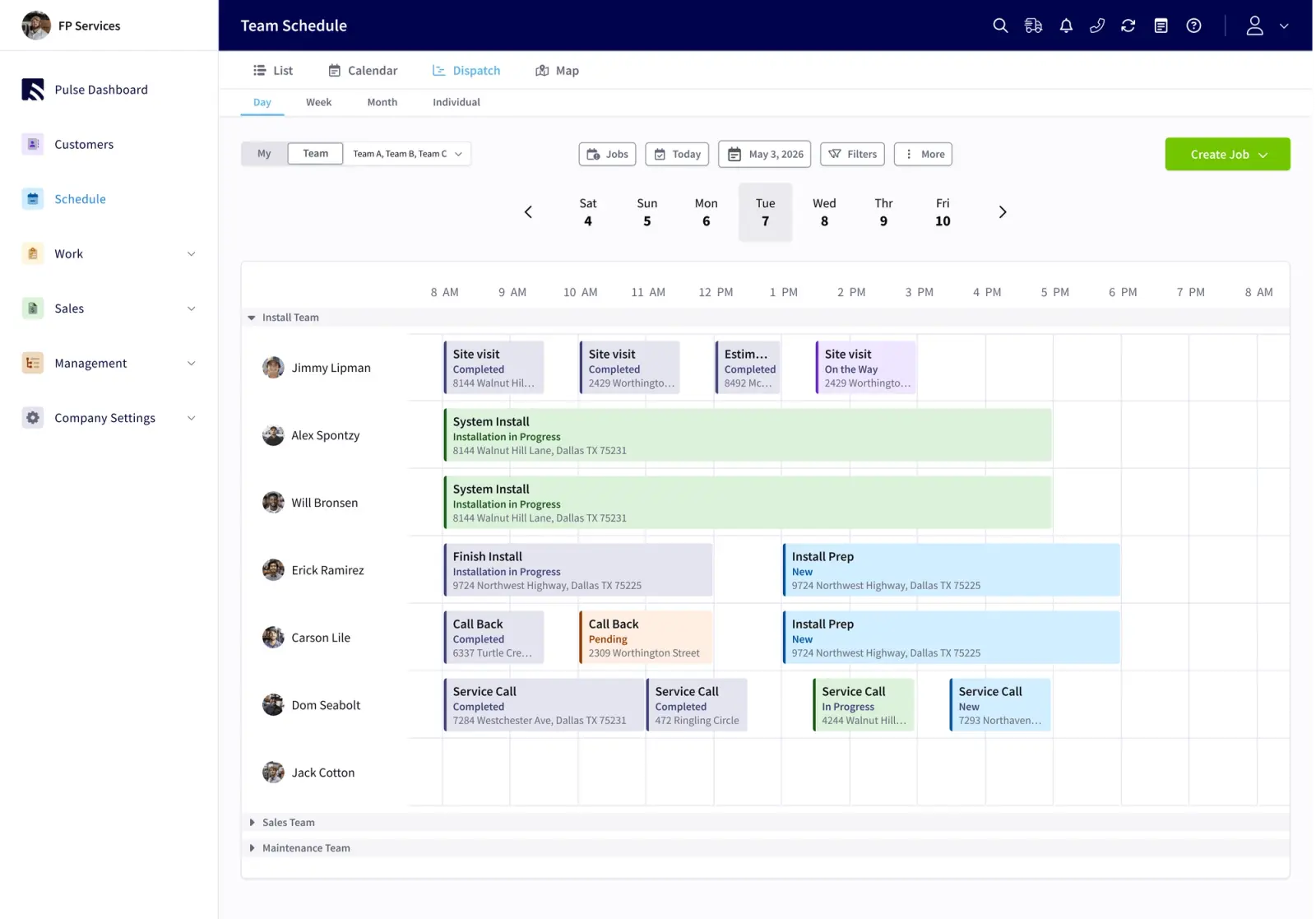
Here is where information often breaks in a typical garage door operation:
-
The emergency call becomes a phone tree: your dispatcher calls around to find who is closest and qualified, then manually rearranges the day.
-
The truck is out of a 9-foot torsion spring. A typical service truck carries 80 to 150 line items, including springs by IPPT rating, steel and nylon rollers, cables, opener boards, gear kits, and weather seals. When one item runs out, a one-trip job becomes two.
-
The install quote gets built by hand: a tech walks a driveway, writes down opener options, and calls the office to confirm pricing, which may differ from what another tech quoted last week.
-
The invoice waits on the office: the tech finishes the job, but the office has to re-key the ticket before an invoice can go out, sometimes days later.
None of this is a failure of effort. Growth outpaces the processes that carry information from the field to the office and back. To avoid these breakdowns, you need to test potential software against your real workflow before you buy.
What to Test in a Demo: A Garage Door Workflow Checklist
Most demos show you a feature list. You need to see whether the software can handle your actual day. Before you sit down with any vendor, run them through these six scenarios:
-
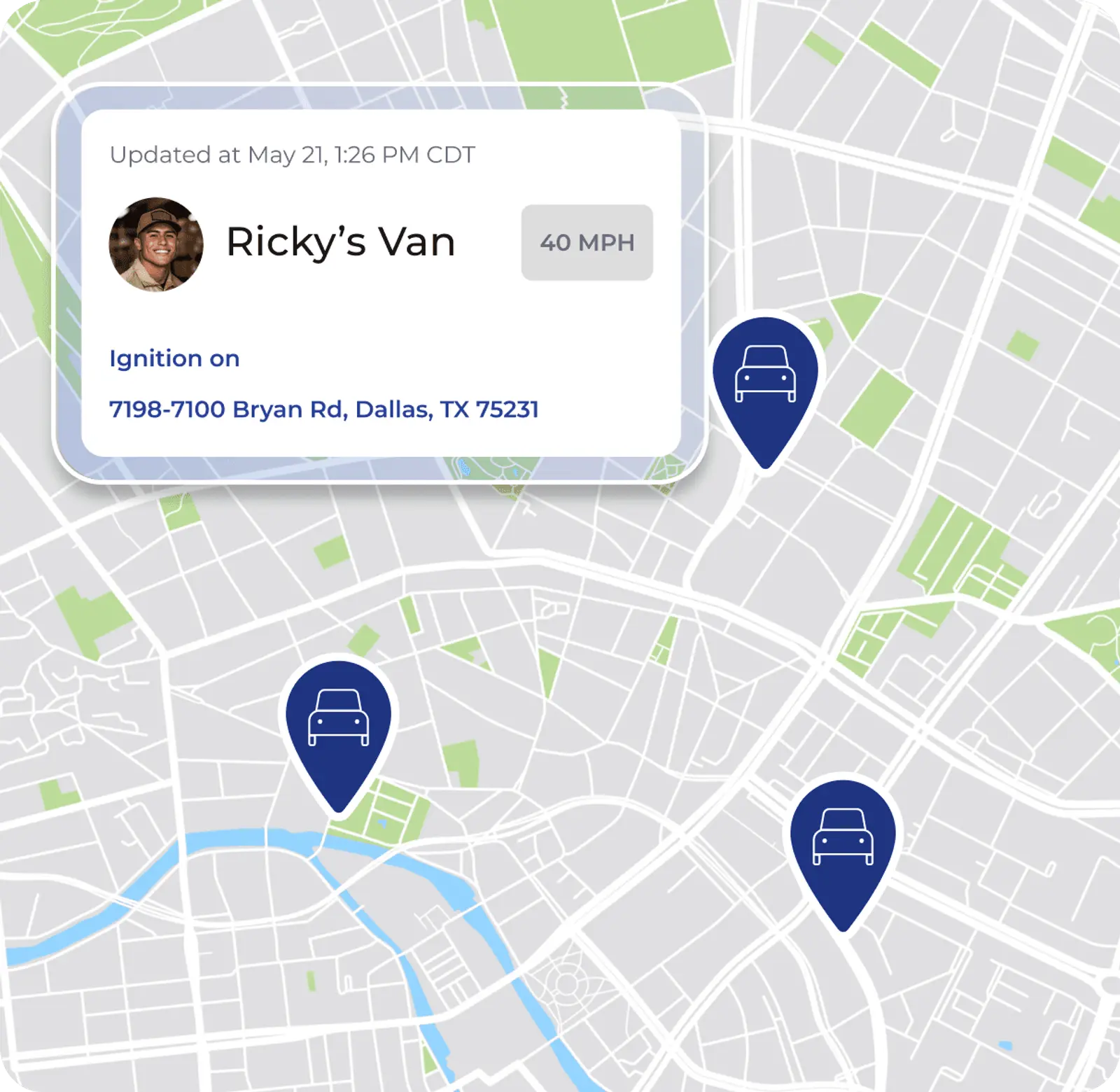
The emergency broken-spring call, end to end. Your dispatcher should take an inbound call, find the nearest qualified tech, dispatch them, and have that tech pull up an on-site quote from a price book, then collect payment before leaving the driveway. Walk the whole sequence, not just the scheduling screen.
-
On-site estimating with a price book built for spring and opener repairs. A tech should build a torsion spring replacement quote or a good-better-best opener quote in the driveway from preset pricing. Check how long it takes and whether the price book includes labor and materials as separate line items.
-
Parts deduction from truck inventory. When a tech uses a torsion spring, two rollers, and a cable on a job, the system should automatically deduct those from that truck’s stock. You should see when a truck is running low on a specific SKU before dispatch.
-
The QuickBooks handoff and what happens when something gets corrected. Ask directly what happens when your bookkeeper corrects an invoice in QuickBooks Online. A real two-way sync carries the correction back into the field service software so you catch sync errors early instead of having to untangle them once dozens of invoices are affected.
-
Technician adoption, including bilingual crews. Look at the mobile app from a tech’s perspective. A new hire should follow it without a long training session. If part of your crew works in Spanish, the app should run in Spanish for those techs while the rest of the crew runs it in English.
-
What onboarding actually takes. Get a written timeline, not a verbal estimate. Ask who runs your implementation, how many sessions are included, and what happens to your existing QuickBooks Online data when you connect.
Walk Through These Scenarios in a FieldPulse Demo
Choosing By Team Size: What a 6-Tech Shop Needs Vs. a 20-Tech Shop
How Team Size Changes What You Need
The right software for your garage door business depends heavily on your team size. A shop with six or fewer techs can often run on a simpler tool until inventory tracking, permissions, multi-stage workflows, or job-level job costing become priorities. A shop with 10 to 20 techs needs a platform that carries the emergency spring call, the driveway quote, and the truck stock without the office re-keying everything, and that still fits at 30 techs.
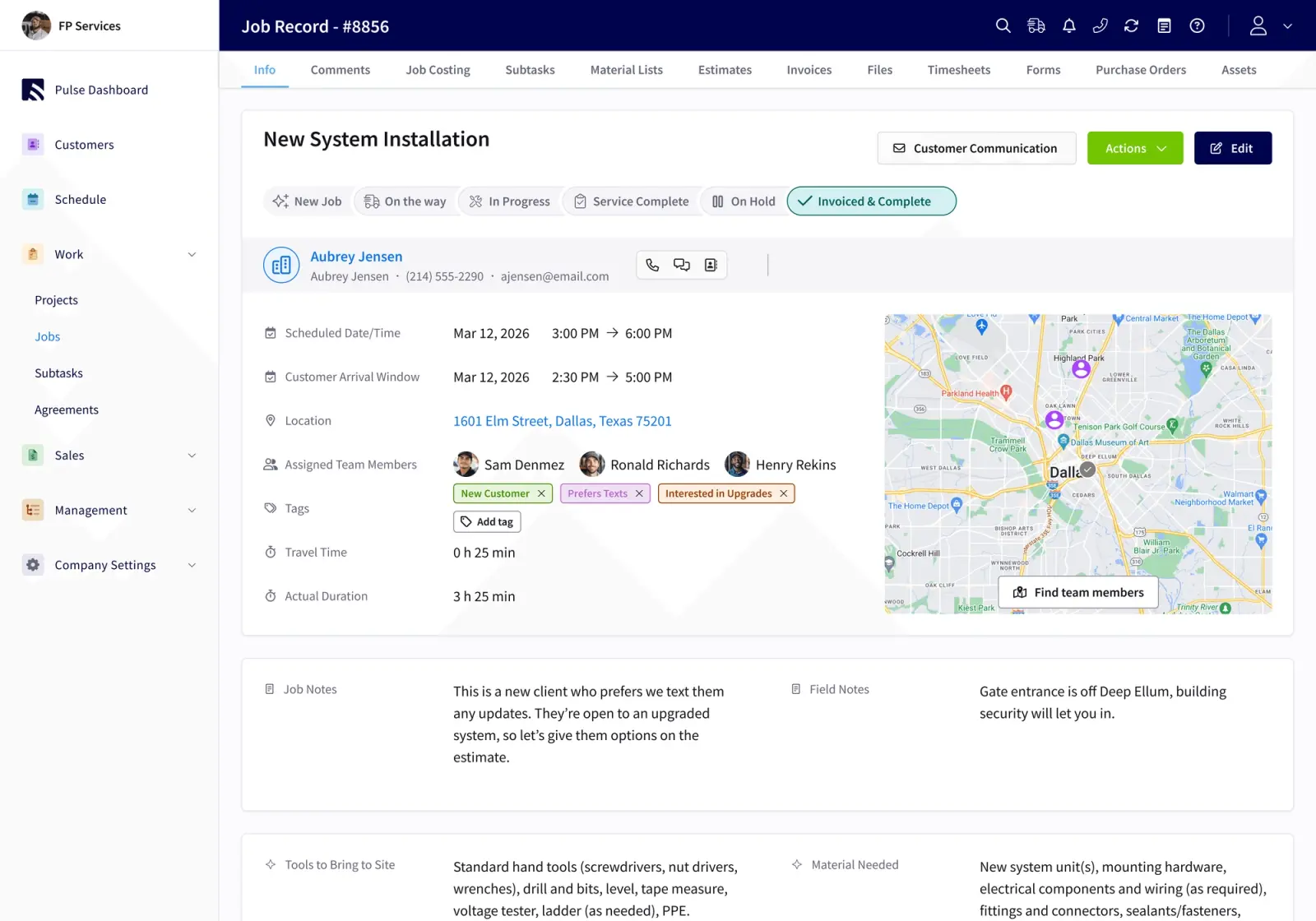
A 6-tech garage door shop typically has the owner close enough to every job that manual handoffs still work. Because the dispatcher knows the schedule and the office knows the trucks, the gaps are manageable. The team is small enough to cover them with phone calls.
At 15 or 20 techs, that pattern stops working. The owner cannot stay close to every job. The dispatcher cannot hold the whole schedule in their head. The office cannot re-key every ticket before an invoice goes out without falling behind. What breaks operationally is the way information moves.
A 6-tech shop can often get by with a simpler tool. Once inventory, permissions, multi-stage workflows, and job costing all show up at the same time, a simpler tool stops fitting.
FieldPulse is built for established, team-based garage door companies of roughly 7 to 50 technicians. If you are running a team and need the office and field to stay in sync across emergency calls, installs, and maintenance routes, FieldPulse fits that shape of business.
Essential Features for Garage Door Business Software
Garage door operators tend to ask for three core capabilities. Here is what each one looks like in your day-to-day work:
Truck inventory management. You need to know, before you dispatch, whether the truck on a broken-spring call has a 9-foot torsion spring on it. A truck without the right roller or spring turns a one-trip job into two trips, which is one of the biggest profit margin leaks in garage door operations. Effective inventory tracking does three things: it deducts parts from truck stock when a tech uses them, fires low-stock alerts before dispatch, and restocks from a central warehouse rather than from memory.
On-site estimating. A tech standing in a customer’s driveway needs to build a spring or opener quote in minutes, not call the office for pricing. That requires a price book with preset rates for torsion spring replacement, cable repair, roller swaps, and opener installs, including good-better-best opener options so the customer can choose on the spot. The quote should convert to an invoice without anyone re-entering the line items.
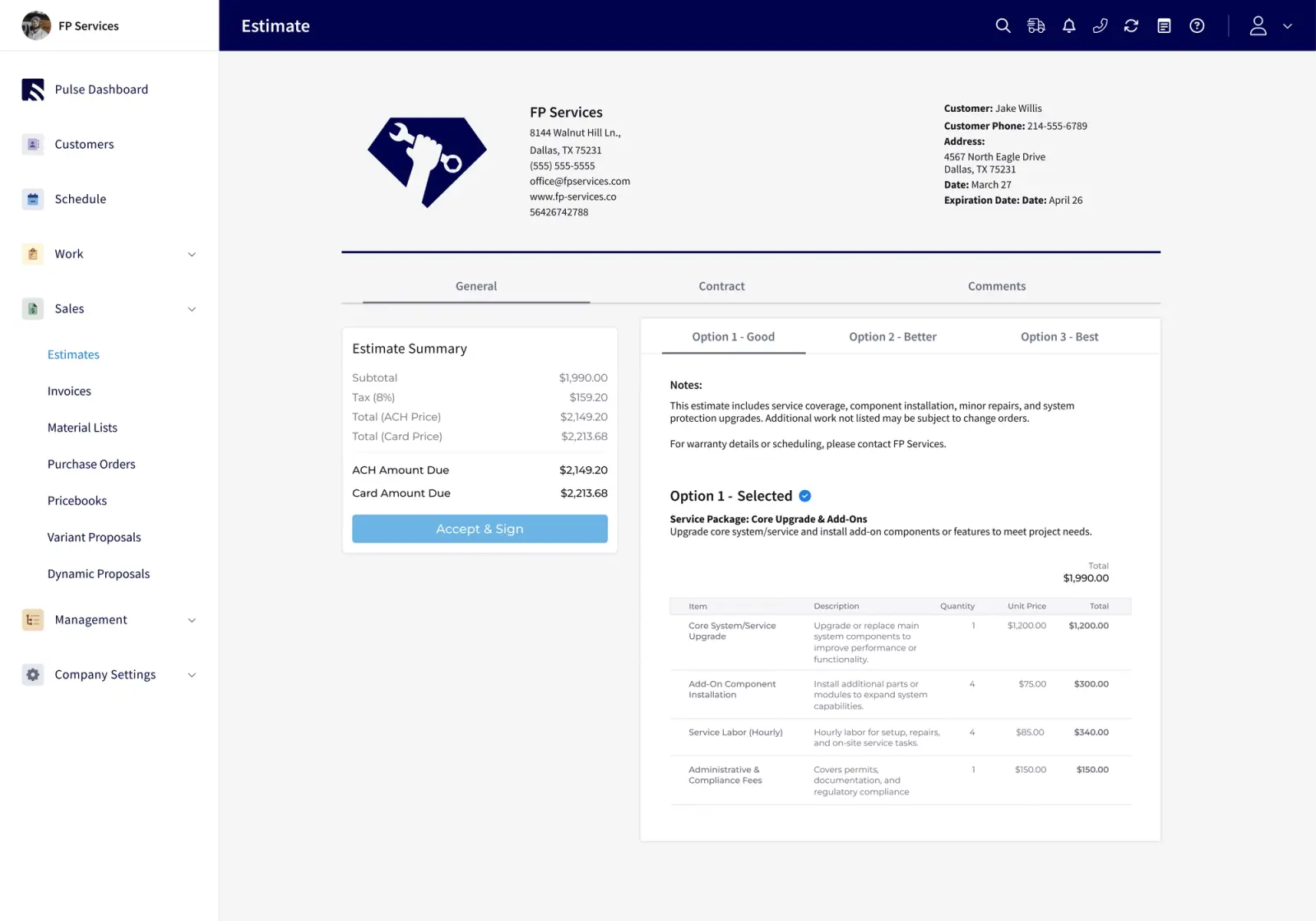
Accounting sync. You need more than a basic connection to QuickBooks Online. When your bookkeeper corrects something in QuickBooks, a one-way push overwrites the fix. A real two-way sync carries the correction back into the field service software so the office stops re-keying invoices and month-end reconciliation becomes routine work instead of a project.
FieldPulse includes permissions and job costing in the platform, with inventory management available as an optional module. The Pricebook, which holds standard pricing for services, materials, and labor, is an add-on that lets your techs build spring and opener quotes from preset pricing in the field. These features are designed specifically for the challenges garage door contractors face.
Why FieldPulse Fits Garage Door Contractors
FieldPulse fits established garage door teams that have outgrown manual handoffs and need one platform to carry the job from the 2am call to the collected invoice.
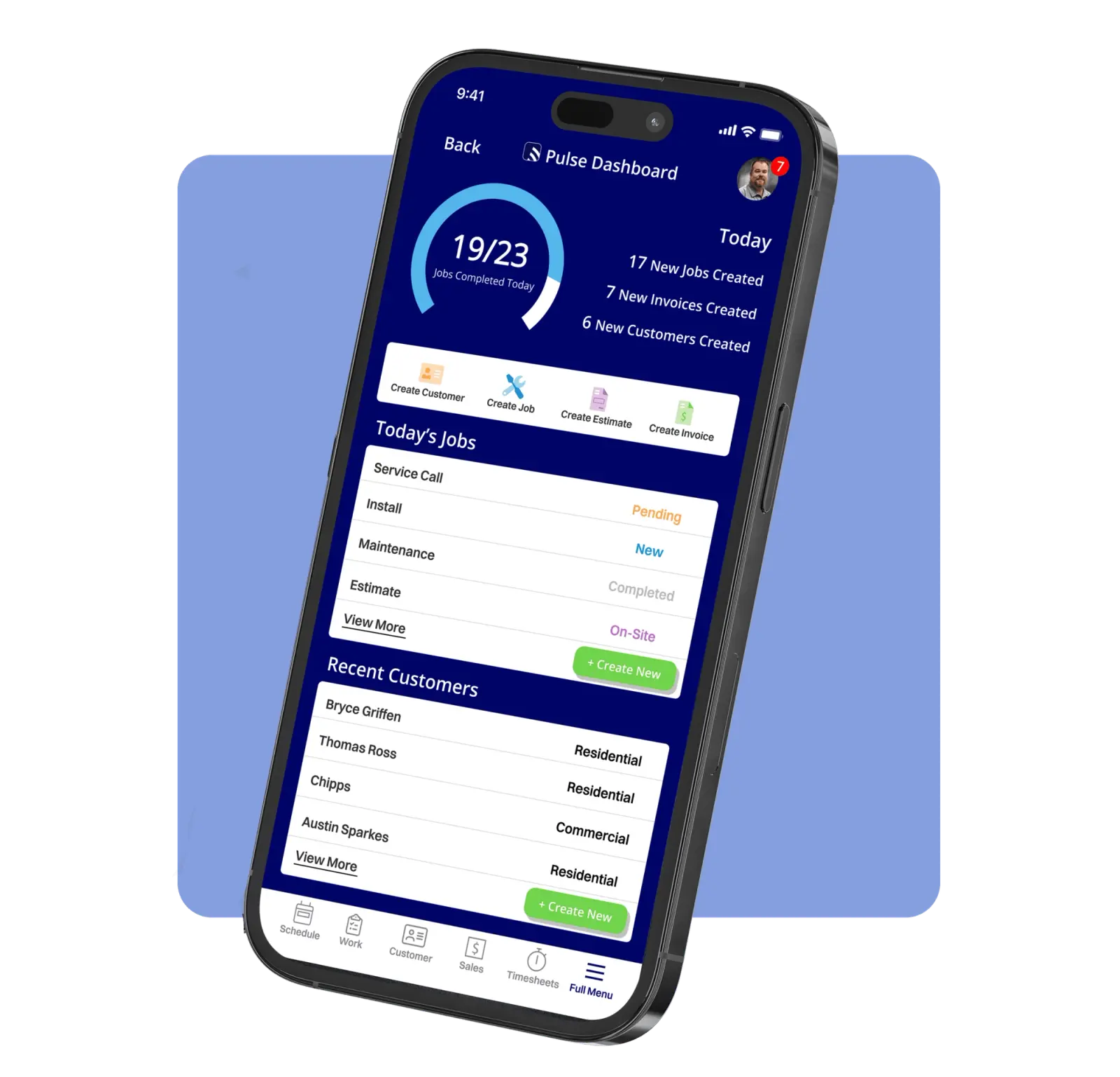
The spine of the platform is ClearPath, included in the core product. ClearPath turns your process into a guided workflow. Your team defines the stages a job moves through, such as estimate, service, and installation, and what has to happen at each stage before the job moves on. Your techs see a clean mobile view showing only what the current stage requires. The office sees job progress in real time, which eliminates constant phone calls.
Greg Giaquinto is the second-generation owner of J.A.G. & Sons Overhead Door, the family-owned garage door company he runs alongside his father Joe Giaquinto. He described building this out directly: “Our three main job types are estimate, service, and installation, and each one of those has its own custom workflow to make sure we do not miss any steps. As we grow, FieldPulse grows with us.”
For garage door companies with bilingual crews, ClearPath’s Mobile Focus View is part of the FieldPulse mobile app, which is available in Spanish (mobile app only, enabled per user by the FieldPulse team). The entire interface, including navigation, record labels, and job stages, runs in Spanish for the techs who need it, while the rest of the crew runs it in English. A mixed crew works from the same jobs and the same ClearPath stages without anyone translating screens in their head.
Cole Geiger of Statewide Garage Door (6–10 techs) put it plainly: “FieldPulse Customer support and customization is really what sets them apart from other trade software platforms. Not just there to tell you where to look for an answer to a question but in some cases actually just took care of the issue. It’s as if you gain employees to YOUR business not just paying to use software.”
The Best Garage Door Management Software in 2026 covers FieldPulse’s full feature set in more detail if you want to go deeper on specific capabilities.
Explore FieldPulse for Your Garage Door Team
What Onboarding Actually Takes
Switching field service software takes real work, and planning for that work keeps your rollout on track.
FieldPulse onboarding typically runs two to six weeks, depending on your team size, which capabilities you turn on, how much data needs to migrate, and how your QuickBooks Online setup is handled. An implementation manager runs recurring working sessions with your team. Your existing QuickBooks Online customers and records come with you when you connect, so you are not rebuilding a customer list from scratch.
The work gets sequenced into phases with small tasks between sessions rather than dropped on you at once. RDI, a commercial installation company that grew from 15 to 50 employees on FieldPulse, described their approach: “We ripped band-aids off one at a time, instead of all at once.” They started with scheduling, then invoicing, then time tracking, then ClearPath. Their time-tracking rollout, with a field crew that had used access files and time cards for thirty years, was running payroll within two weeks.
The same phased approach works for garage door companies. Start with dispatch and invoicing. Add the Pricebook and truck inventory once the team is comfortable. Roll out ClearPath workflows for estimate, service, and installation jobs once the foundation is solid.
For more on how growing garage door teams handle this transition, see Best Garage Door Business Software for Growing Teams.
Frequently Asked Questions
What Is the Best Software for Managing a Garage Door Business?
The best software depends on your team size and where your operation breaks operationally. A shop with fewer than six techs can often run on a simpler tool. Once you are managing multiple trucks, emergency dispatch, truck inventory, and QuickBooks reconciliation at the same time, you need a platform built for that complexity. As mentioned, FieldPulse fits teams of 7 to 50 technicians, with ClearPath workflows for estimate, service, and installation jobs, truck inventory tracking, on-site estimating from a price book, and a two-way QuickBooks Online sync.
How Much Does Field Service Management Software Cost?
Pricing varies based on how many people need access and which capabilities you turn on. Most platforms use seat-based pricing, so your cost depends on your team size. Add-ons such as a price book, VoIP, AI call answering, or fleet tracking are priced separately on top of the base platform. The fastest way to get a real number for your business is a demo that covers your team size, your trade, and what you need running on day one.
Do You Need Truck Inventory Tracking for Springs and Openers?
If you are running more than a few trucks, you do. A tech who arrives without the right torsion spring or opener turns a one-trip job into two, which costs time, fuel, and customer goodwill. Truck inventory tracking lets you see what is on each truck before dispatch, deduct parts automatically when a tech uses them on a job, and get low-stock alerts before a truck goes out short. For garage door companies, the key SKUs to track include torsion springs by size and IPPT rating, extension springs, steel and nylon rollers, lift cables, opener gear kits, and weather seals.
Can Techs Quote and Collect Payment in the Driveway?
Yes, with the right setup. FieldPulse lets your techs build a spring or opener quote from preset pricing in the Pricebook, including good-better-best opener options, present it to the customer, convert it to an invoice, and collect card or ACH payment on site. The job record, the invoice, and the payment all connect without the office re-entering anything. This workflow removes the “I’ll mail you a check” delay and gets money collected while the tech is still on the property.
How Long Does Implementation Take?
FieldPulse onboarding typically runs two to six weeks. The variables are your team size, which capabilities you enable, how much data needs to migrate, and how your QuickBooks Online setup is handled. An implementation manager runs recurring working sessions with your team throughout the process. The most successful rollouts are phased: start with the workflows your team uses every day, get comfortable, then add more. Plan against the real window rather than hoping for the fastest possible outcome.
Conclusion and Next Steps
The right field service software for your garage door company handles the 2am broken-spring call, the driveway opener quote, the truck that is out of a 9-foot torsion spring, and the invoice that needs to go out the same day, all without the office re-keying everything.
The team-size framework is straightforward. A 6-tech shop can often get by with a simpler tool. A 15-to-20-tech shop needs a platform that carries the full workflow and helps you manage operations without manual handoffs. As mentioned earlier, FieldPulse fits teams of roughly 7 to 50 technicians.
Before your next demo, take these steps:
-
Document your current garage door workflow, from emergency call to collected invoice, and identify exactly where the handoffs break.
-
Pinpoint where the emergency spring call falls apart. Look at dispatch, truck stock, the quote, and the invoice.
-
Bring your office manager and one tech to the demo. Have them look at their own views, including the scheduling board, the mobile app, and the QuickBooks sync, not just the owner’s reporting screen.
-
Run the demo checklist from this guide and keep the conversation focused on your scenarios.
FieldPulse holds a 4.8 out of 5 rating across G2, Capterra, the App Store, the Google Play Store, and other software-review sites. On average, customers experience 25% gains in efficiency, with office teams saving more than 40 hours per month.
Schedule Your FieldPulse Garage Door Demo
Or call sales at +1 (817) 635-2218.