








Key Takeaways
- Offline mode in a field service CRM keeps job and customer data on the tech’s device so work continues when signal drops and syncs back to the office when the device reconnects.
- FieldPulse caches a week of recent work so techs can finish most job tasks without signal, with details explained below.
- Techs handle core job work offline, while new jobs, new customers, purchase orders, and most payments wait until they reconnect.
- FieldPulse protects drafts when signal drops mid-edit and syncs them automatically when coverage returns.
- FieldPulse keeps your office and field on one current record through clear sync and reconciliation rules, which helps residential service teams stay productive in dead zones.
See FieldPulse offline in action
The Lifecycle Of An Offline Job From Dispatch To Reconciliation
Offline mode shapes how your office and your techs work together. A job that starts in the office and ends in a basement or rural property passes through dispatch, offline work, reconnection, and reconciliation. Each stage has to hold up so your records stay accurate.
What FieldPulse Caches On The Device Before Signal Drops
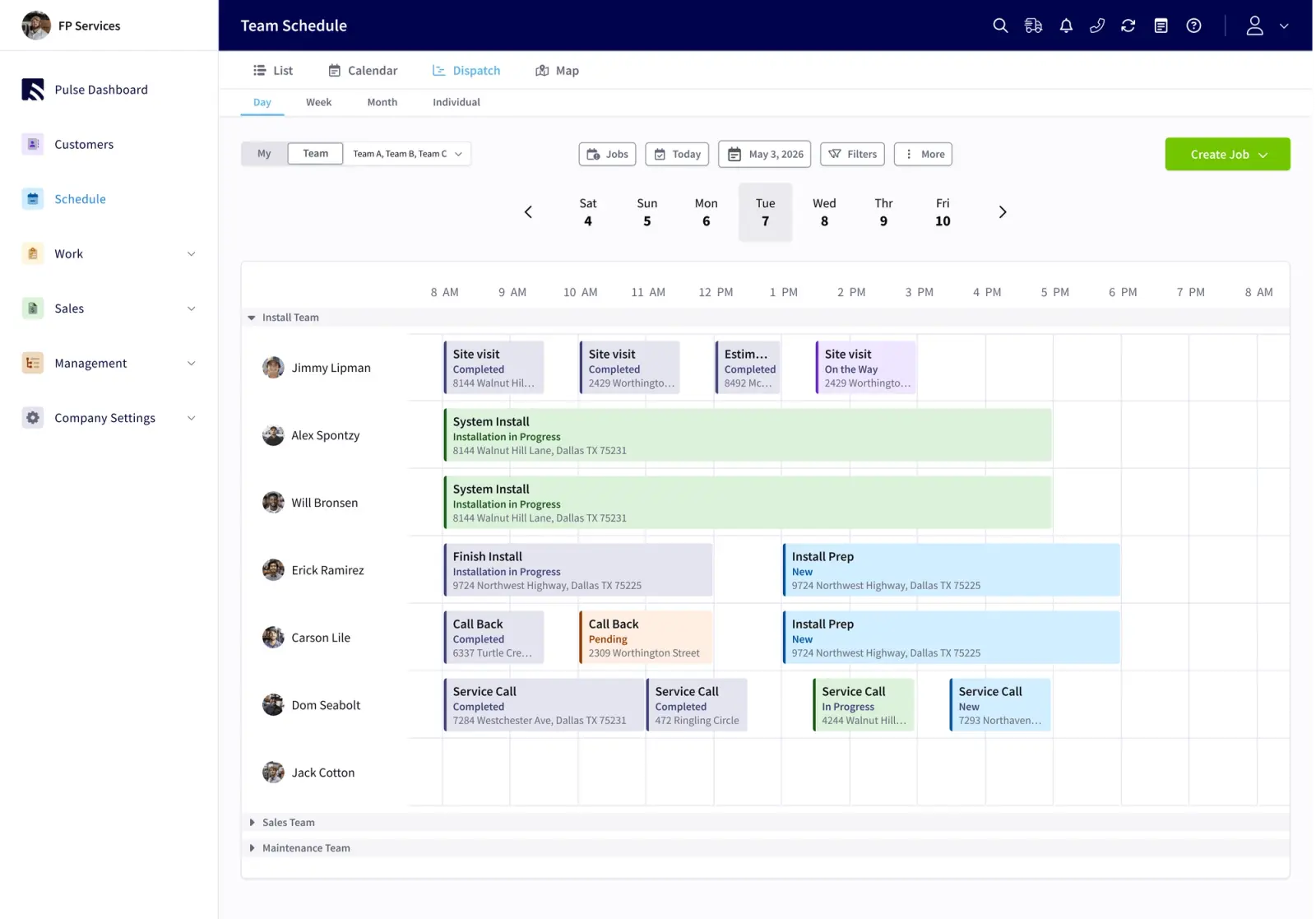
FieldPulse loads the device with what your tech needs before they lose signal. The cache window covers seven days of recent activity, including jobs, projects, customers, estimates, invoices, line items, forms, and templates.
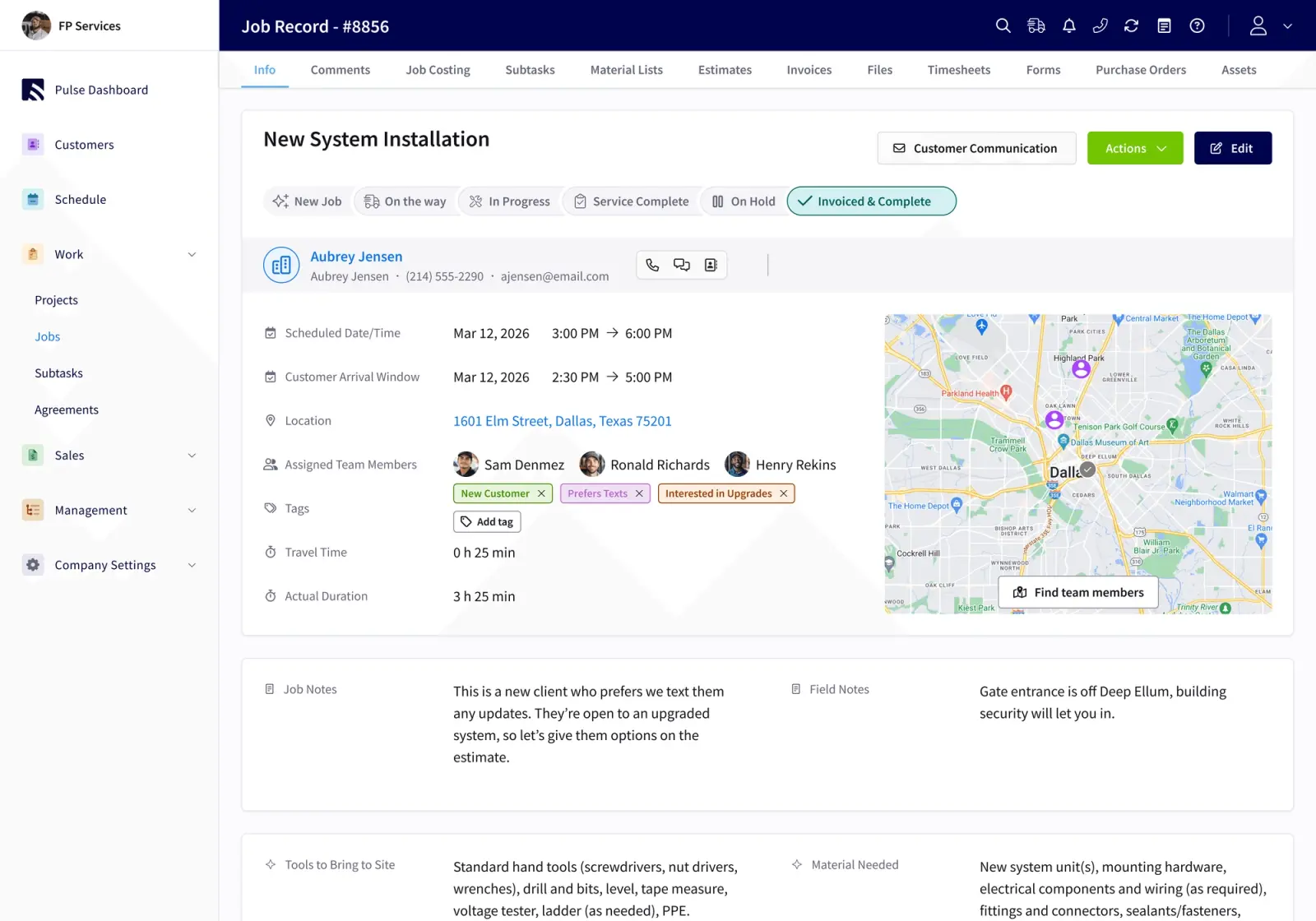
That window matters. FieldPulse caches jobs and projects for 1 week offline, so a job created more than seven days ago without recent updates is not available on the device until the tech reconnects. The practical fix is simple. Your office creates or updates the job record before dispatch. That puts it inside the cache window and ensures the tech arrives with everything in hand. Jobs that fall outside the window point to a scheduling workflow issue. Keeping job records current keeps them available.
For more on how offline capability fits into a complete field service software, see Field Service Apps With True Offline Mode: A Guide.
What Offline Mode Lets Your Techs Do
FieldPulse supports most standard job tasks offline. Here is what a tech can complete without any signal:
- View all cached jobs within the seven-day window
- Add unlimited job notes
- Upload up to 50 photos at a time
- Change job status
- Clock in and out
- Edit up to 600 existing custom forms, 200 each for jobs, projects, and customers, and draft new ones from 20 cached templates (requires the Custom Forms add-on)
- Edit up to 300 cached material lists and 100 bundle items
- Work from up to 600 cached estimates and invoices, with 10,000 line items, 100 estimate templates, and 100 invoice templates
These limits reflect what a tech can realistically finish before signal returns. A tech on a full HVAC maintenance call in a basement mechanical room can document the visit completely. They can add notes, take photos, update status, track time, and complete forms without a bar of service. See how this plays out specifically for HVAC teams in Offline HVAC Technician App: What Works When Signal Drops.
What Techs Cannot Do Offline And How To Plan Around It
Every platform has offline limits, and FieldPulse is clear about them. Here is what is not supported without a connection:
- Payment collection is not supported offline in FieldPulse, except cash, which can be marked and reconciled later
- Purchase order creation
- Creating new customer records
- Creating new job records
ClearPath’s Mobile Focus View also does not display while offline.
Planning around these limits stays simple. Your office creates the job record and customer profile before dispatch. That is the standard workflow and keeps the job inside the cache window. Payment gets collected when the tech is back in signal, or your team marks cash and reconciles it later. Industry data indicates 40 to 43% of field service calls occur in areas with poor or no cellular coverage. Build your dispatch process around that reality instead of discovering it mid-job.
Walk through a full offline job
Draft Protection And Sync Behavior When Signal Drops Mid-Edit
Many teams worry about losing work when signal cuts out during an edit. FieldPulse protects that work.
When signal drops mid-edit, the active draft transitions automatically to an offline draft. The tech keeps everything they have entered. The app saves updates locally on the device. When the device reconnects, whether that happens a few minutes later in the driveway or two hours later after the job, everything entered offline syncs immediately. The tech does not tap a manual sync button or trigger a batch upload. As soon as signal returns, the queue clears.
This behavior matters most where signal is unpredictable, such as basement mechanical rooms, crawlspaces, rural properties, and steel-framed commercial buildings. The tech keeps working without watching signal bars. The app handles the switch between online and offline.
Sync Conflicts And The Office’s View While Techs Are Offline
Offline mode also affects what your dispatcher sees and how edits reconcile.
When a tech goes offline, the office still has the job record. The dispatcher can see the last known status, the cached job details, and the schedule. The office cannot see new notes, photos, or edits the tech enters while offline, because those updates sit in the device queue until sync runs.
A common conflict looks like this. A tech is offline in a basement and updates a work order. At the same time, the dispatcher reassigns a line item or updates the customer record in the office. When the tech’s device reconnects, both sets of changes need to reconcile. A well-designed system, and FieldPulse follows this model, syncs on reconnect and applies defined rules instead of silently overwriting one version. The most common offline failure in production is a conflict resolved badly, where a supervisor’s correction disappears under a technician’s older copy.
For your office, the practical move is simple. When a tech has been dark for a while, treat their status as last known, not live. Once they reconnect, sync brings the record current. The office and the field then work from one current set of information. That shared record is what FieldPulse is designed to deliver.
Initial Sync And Cache Freshness Before The First Launch
The first time a tech launches FieldPulse on a new device, the app needs to download the cache. If your business has a large asset database or a big photo library, that initial sync can take longer than you expect. Plan for that. Do not hand a tech a new phone on the morning of a full schedule and expect the app to be ready in two minutes.
Cache freshness is the next consideration. If the office updates a job after the device last synced, the tech may work from a slightly older version of that record until the next sync. The seven-day cache window and sync-on-reconnect behavior limit how stale that data can get, because any time the device has signal it pulls current data. In practice, the best way to keep the cache fresh is to make sure techs connect regularly, even briefly, between jobs.
For administrators managing a fleet of devices, build a sync checkpoint into your dispatch workflow. Confirm devices have synced before techs head into known dead zones.
Why FieldPulse Is The Best Solution For Field Service CRM Offline Mode
FieldPulse fits established, team-based residential service businesses in the 7-to-50-tech range, with strong support for HVAC, plumbing, and garage door service. Its offline strength comes from how the system is built, not from a long feature list.
FieldPulse uses the seven-day cache described above so techs have the records they need in the field. Drafts in progress transition automatically to offline drafts when signal drops, and everything syncs as soon as the device reconnects. This sync behavior keeps your office and field working from one current set of job, customer, workflow, and payment information.
That unified record separates a real offline solution from a read-only cache. Read-only degradation, where the app shows job details offline but refuses new input, turns a digital system into an expensive reference card. FieldPulse avoids that trap. Your techs can document, update, and close out the majority of a job without signal, and the office receives a complete, accurate record when sync runs.
FieldPulse holds a 4.8 out of 5 aggregate rating across G2, Capterra, the App Store, the Google Play Store, and other software-review sites. On average, FieldPulse customers see 25% efficiency gains, and office teams save more than 40 hours per month.
Explore FieldPulse for your team
How To Test Offline Mode Before You Commit
Before you sign with any platform, run this checklist in the demo. These questions reveal whether offline mode is real or just a marketing checkbox:
- Can you show a complete technician workflow end to end with signal turned off?
- What happens when signal drops mid-edit?
- What does the office see while the tech is offline?
- What cannot be done offline?
- How long does the initial sync take on a device with a full asset database?
- What happens when the office edits a job the tech already has cached?
If a vendor cannot answer the last two questions clearly, they have not thought through the office side of offline mode. That gap often turns into reconciliation work for your office team every time a tech comes back from a dead zone.
Frequently Asked Questions
How Much Data Can Be Cached Offline?
FieldPulse caches the past seven days of jobs, projects, customers, estimates, invoices, line items, forms, and templates on the device. Specific limits include up to 600 cached estimates and invoices with 10,000 line items, 100 estimate templates, and 100 invoice templates; up to 600 existing custom forms, 200 each for jobs, projects, and customers, with 20 cached templates for drafting new ones (requires the Custom Forms add-on); and up to 300 cached material lists and 100 bundle items. Techs can upload up to 50 photos at a time. Any job or record that falls outside the seven-day window becomes available again once the tech is back in signal.
Can Techs Create New Jobs Offline?
No. Your office creates the job record before dispatch. Techs can view and work from all cached jobs within the seven-day window, but they cannot create new customer or job records while offline. The job should be set up in the system before the tech leaves the shop, which also keeps the record inside the cache window and ready on the device.
Do Photos And Signatures Work Offline?
Techs can upload up to 50 photos at a time while offline. FieldPulse’s Custom Forms feature allows teams to collect customer signatures directly on forms, and the FieldPulse app supports offline editing and signature capture, with updates syncing automatically when back online. Both photos and signatures save locally on the device and sync automatically when the device reconnects.
What Happens When Two People Edit The Same Job?
When a tech is offline and the office updates the same job record, both sets of changes exist temporarily in different places. When the tech’s device reconnects, FieldPulse syncs and applies defined reconciliation behavior instead of silently overwriting one version. A well-designed system flags genuine conflicts for review so one edit does not quietly erase another. The result is that the office and the field work from one current record.
How Reliable Is Sync After Several Hours Offline?
Everything entered offline saves locally on the device and syncs as soon as the device is back in signal. The seven-day cache window limits how stale cached data can get, and sync-on-reconnect behavior means the office receives an updated record as soon as the tech’s device finds coverage. The main risk after extended offline periods is stale reference data if the office updated a job while the tech was dark. Keeping devices synced between jobs, when signal is available, is the practical way to reduce that gap.
Conclusion: Your Platform Should Keep Working When Signal Does Not
Techs lose signal in crawlspaces, basements, mechanical rooms, and rural service areas. Your field service software should treat that reality as a normal part of the job.
When signal drops, FieldPulse keeps working. The seven-day cache keeps recent jobs, projects, customers, estimates, invoices, forms, and templates on the device. Drafts in progress stay safe and transition to offline drafts automatically. When the device reconnects, everything syncs, so your office gets a complete, accurate record without chasing the tech for details or re-entering data at the end of the day.
For growing residential service teams in HVAC, plumbing, and garage door service, where the office and the field must stay connected across many job types and techs, that reliability becomes the base your operations run on.
Schedule your FieldPulse walkthrough