Our Platform







Our Products
Operator AI
Capture leads and book jobs with AI.
NewClearpath
Design every workflow and ensure your team sticks to it.
Custom Forms
Stop hunting for paperwork with digital forms.
Pricebook
Build custom Pricebooks to boost your sales.
Engage
All your communication in one place.
Fleet Tracking
Monitor your fleet from one dashboard.
By Industry
By Segments
Learn
Connect
Discover

About Us
Sales +1 (817) 635-2218 Customer Support (469) 382-5668


The Callback Trap: Why Customer Update Calls Are a Symptom of an Invisible Field
Every "where's my tech?" call is the same problem wearing a different face. It's not a communication issue. It's what happens when the field goes dark the moment your tech leaves.
Jul 6, 2026
Share


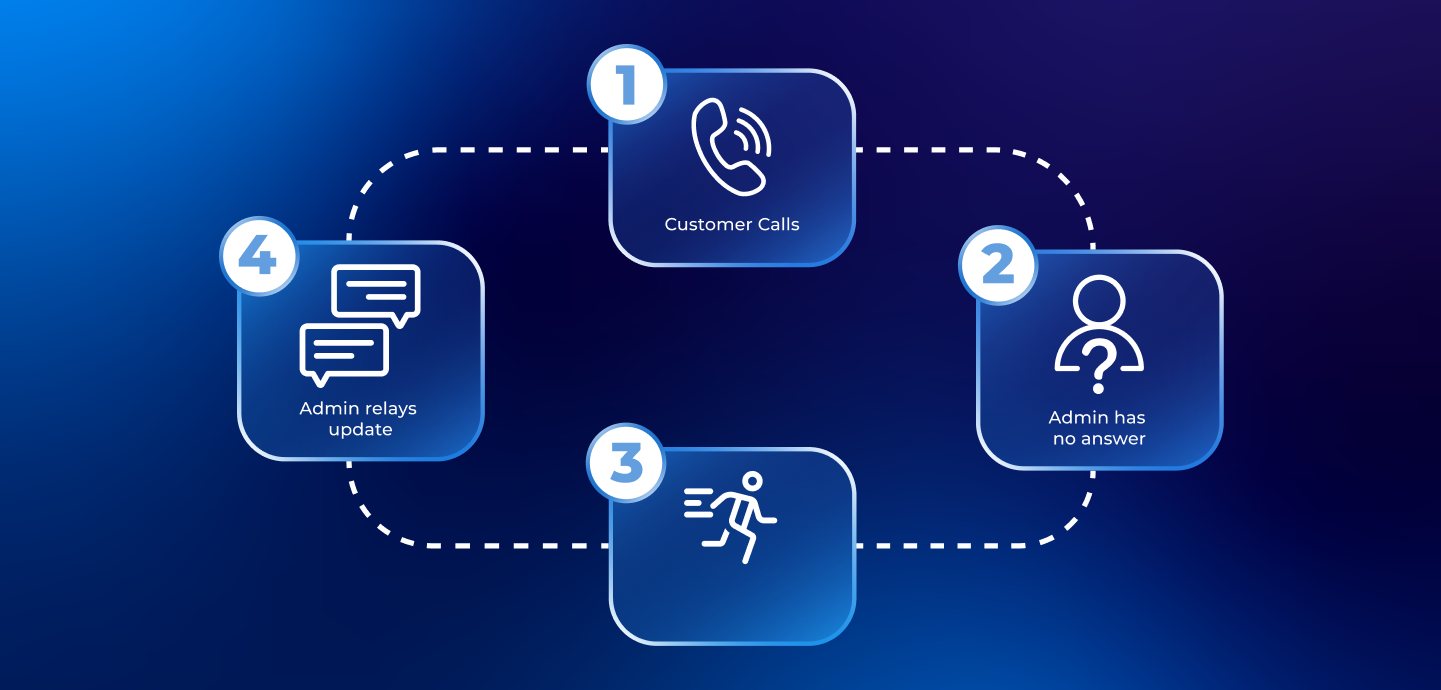
Every day, admins at field service businesses are stuck in the same loop: a customer calls for an update, the office has no answer, so someone has to chase down the technician before they can call the customer back. Delivering reliable customer updates should be a baseline expectation — not a daily operational challenge. Instead, it has become one of the biggest drains on admin time across field service providers of every size. This is not a communication problem. It is a visibility problem — and it is costing more than most owners realize. The root cause has a name: the Blind Spot. The moment a field service technician leaves the office, the field goes dark.
Job status, arrival times, materials used — none of it travels back to the office automatically. So the admin does the only thing they can: turn a simple question into a customer callback. They hang up, track down the technician, wait for a response, and dial the customer again. What should take ten seconds becomes a four-step relay. Those repetitive calls add up fast — in wasted time, in operating costs, and in customer satisfaction that quietly erodes with every delay.
Where the Blind Spot Begins
The Blind Spot starts the moment the field technician leaves the office. Inside the office, everything is structured, the schedule is clear, the job details are documented, and the full customer job history is available. Once the work moves into the field, that structure disappears. Information stops traveling with the job — and with it, so does your ability to manage the customer journey from start to finish.
This is the structural cause of what we call the Status Trap. The Blind Spot is the gap in visibility — the moment the office loses sight of what is happening in the field. The Status Trap is what that gap produces: a constant cycle of customer callbacks where every customer update depends on an admin manually tracking down information before they can respond. Today's customer expectations around field service delivery have never been higher — and field service teams that rely on manual relays to meet them are fighting an uphill battle. The Blind Spot makes it nearly impossible to keep up without burning through admin time to compensate.
What the Status Trap Is Costing Your Field Service Business
At first, the Status Trap may look like a small problem. A few extra calls and follow-ups. But it is costing the business in two places at once, inside the office and in the customer experience.
Wasted Admin Time
Every time a customer calls for an update, the admin gets pulled away from what they are doing, whether that is handling new service requests, building estimates, or sending invoices. Instead of being able to focus on the high-value work that drives business growth, they are stuck relaying information that should already be available. That is manual rework, and it increases costs without moving work forward.
Technician Productivity
Every inbound status call is also an interruption for your field service technicians. Whether it comes through a dispatcher or directly to their cell, it breaks focus mid-job. For skilled technicians doing complex work, context-switching is not free — it adds time, increases error risk, and reduces the number of jobs that can be completed in a day. Depending on call volume, the drag on team productivity can mean 10–20 minutes of interrupted work time per technician per day — time that is not billable and does not move the job forward. At scale across your field teams, that is a significant cost to your business.
Field Service Customer Experience
Customers are not just evaluating technician productivity and the quality of the work done on site. They are evaluating the entire experience, and response time is a big part of that. When a simple update requires a callback, that delay shapes overall customer satisfaction. It shows up in customer feedback, in customer sentiment, and in the repeat business that quietly stops coming. Poor customer interactions do not just cost you that job — they cost you customer loyalty. And most customers do not complain before they simply stop calling.
The Real Problem Isn't Customer Communication. It's Visibility.
Poor customer communication in field service is almost always a symptom, not the root cause. The real breakdown is not how your team communicates — it is what they have to work with. When the workflow does not surface information automatically, every customer update becomes a manual task. And when every update is manual, your field service customer experience is only as consistent as your busiest admin's bandwidth. These are the pain points that quietly degrade service quality and overall customer satisfaction over time.
The breakdown starts the moment the field team leaves. The office loses visibility into what is happening, and the information stops moving with the job, creating the Blind Spot. From there, the Status Trap takes over, and without a clear view of job progress, every update has to be tracked down manually just to answer questions.
Without that visibility, everything depends on admins stepping in. If the admin does not make the call, the update does not happen. The workflow is not designed to move information forward — people are.
Where Your Workflow Is Breaking Down
When your workflow does not move information with the job, it creates rework, wastes time, and forces your team to fill in the gaps manually.
That breakdown pulls admins into constant follow-ups just to keep things moving. It turns into a day reacting, chasing updates, and answering the same questions instead of pushing work forward.
The result is a business where the admin is the system. And when the admin is the system, every absence, every busy signal, every missed customer callback is a crack in your service delivery — and your customer experience.
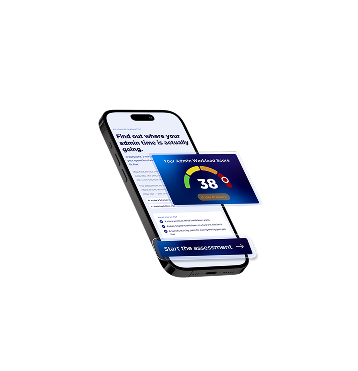
The only way to fix it is to understand exactly where your workflow breaks down — and what that is costing you.
How to Improve Customer Satisfaction in Field Service
Whether you are starting small or ready to build a more defined process, there are steps you can take to reduce the callback loop before it costs you more customers. The right tools and the right workflow design can get you there.
A simple first step is creating a shared way to track job status. Even requiring field technicians to check in at specific points during the day can give the office something to reference instead of relying on phone tag every time a customer asks for an update. But this still depends on someone manually collecting and relaying information. To fully close the Blind Spot, the workflow itself has to move information — not the people in it.
The solved state looks like this: the office knows where every job stands without making a single call. When a customer asks for an update, the answer is already there. Field service technicians log progress from the field without interrupting the work — and when issues come up, they can be resolved on the first visit because the team has the full context. Proactive communication goes out before the customer thinks to reach out, replacing the customer callback loop with a customer communication flow that runs on its own. The result is a consistent experience that builds customer loyalty — and loyal customers who leave positive feedback and repeat business become the foundation of sustainable business growth.
FieldPulse gives your field and office teams real-time visibility into job status and field technician location, so your workflow moves information automatically and the office always knows what is happening without needing to track it down. With an integrated customer relationship management system, updates trigger based on job progress — enabling proactive communication that reaches customers before they think to call. And with mobile access, field service technicians can update job status, upload photos, and log materials on site — so customer history stays complete, service quality stays consistent, and the information travels with the job instead of getting lost in the field.
The Blind Spot never forms. The Status Trap stops running. The admin stops being the relay. And customers expect exactly this kind of fast, consistent field service customer experience — now you can deliver it.
What are the best practices for improving customer communication in field service?
The most effective best practices for customer communication in field service center on removing manual steps from the update process. That means giving field techs mobile tools to log job progress in real time, automating status notifications so customers receive updates at key job milestones, and ensuring your office has live visibility into every active job. When those three things are in place, proactive customer communication becomes a workflow output rather than an admin task — and your team stops reacting to inbound calls and starts delivering a personalized experience at scale. How does poor customer communication affect customer loyalty?
Every friction point in the customer journey — a missed customer callback, a delayed customer update, an unanswered service request — chips away at customer satisfaction and loyalty. Research consistently shows that customers are far more likely to leave after a poor service interaction than to provide customer feedback explaining why. For field service providers, this means customer sentiment problems often go undetected until repeat business starts dropping. The fastest way to create loyal customers is to close the visibility gap so every customer interaction feels informed and responsive — not reactive. What is the impact of the Status Trap on technician productivity and operational costs?
The Status Trap creates a dual drain: admins lose time handling repeat calls and manual follow-up, while field service technicians lose focus to mid-job interruptions. Together, this raises operational costs without adding any value to service delivery. For businesses looking to optimize processes and improve margins, eliminating the Status Trap is one of the highest-leverage changes available — it improves technician productivity, reduces wasted time in the office, and lowers the cost of each customer interaction without requiring additional headcount.
What tools help field service organizations improve customer satisfaction?
The right tools for improving customer satisfaction in field service organizations work by closing the Blind Spot — connecting the office, the field, and the customer in a single workflow. That typically includes: a field service management platform with real-time job tracking and technician location visibility; a customer relationship management system that stores complete customer record history and triggers automated updates; and mobile access for field service teams to log progress on site. When these are integrated, field service delivery improves measurably — first response time drops, average resolution time shortens, and overall customer satisfaction improves because customers are no longer waiting on callbacks to know what is happening with their job.
How can field service businesses reduce customer callbacks without adding staff?
Reducing customer callbacks does not require more people — it requires better workforce management and smarter automation. When your platform automatically notifies customers at key job milestones, provides self service options like real-time job status visibility, and keeps customer history centralized and current, the volume of inbound status calls drops significantly. Field service organizations that have made this shift report not just fewer callbacks, but stronger customer relationships, higher customer loyalty, and a more consistent field service customer experience — all without increasing admin headcount.