








Key Takeaways
-
Appliance repair usually follows a two-visit workflow with a parts order in between, unlike single-visit trades such as HVAC or plumbing.
-
Software needs to track make, model, and serial numbers, hold jobs open across parts orders, and link return visits to the original diagnosis so you do not lose history.
-
Distinguishing warranty work from customer-pay work keeps documentation, approvals, and invoicing accurate.
-
Generic field service tools miss key needs for appliance repair teams, including parts-pending states, equipment records for portable units, and warranty-specific workflows.
-
FieldPulse is built for growing appliance repair teams with ClearPath workflows, inventory tracking, job costing, and two-way QuickBooks Online sync.
The Appliance Repair Workflow: What Makes It Different
Appliance repair works differently from HVAC or plumbing. In those trades, a job usually starts and ends on the same truck roll. In appliance repair, the job almost always spans two visits, and the gap between them is where most software breaks operationally.
Here is what that gap looks like in practice:
-
Make/model/serial tracking. Every job starts by identifying the exact unit. That record, including make, model, serial number, warranty status, and service history, has to follow the customer, the equipment, and every future visit. Without it, your tech arrives blind and your office cannot answer a customer’s question without calling the truck.
-
The parts ordering cycle. Diagnosis happens on visit one. The part gets ordered and the job waits. The return visit happens when the part arrives. That is a two-visit workflow with a parts order in the middle. The software has to hold the job open across that entire gap instead of closing it after visit one.
-
The return visit problem. When a follow-up visit is not linked to the original diagnosis, the history disappears. The part number, the labor already spent, and the notes from the first tech all get lost. The office does not know what the job is waiting for, and the tech arrives without context.
-
Warranty vs. customer-pay work. These are two different workflows on the same job type. Warranty work needs specific documentation, manufacturer or home warranty company approval, and different invoicing. Customer-pay work is more direct. A system that does not distinguish them creates paperwork problems and invoicing errors.
The structural argument is simple: the parts ordering cycle and the two-visit workflow are the standard in appliance repair. The parts-pending state is where general-purpose scheduling tools fall apart, and where appliance repair software earns its name.
See How FieldPulse Handles Two-Visit Jobs
What To Look For In Appliance Repair Software
Use this checklist when you evaluate any platform. These capabilities separate appliance-repair-ready software from generic field service tools.
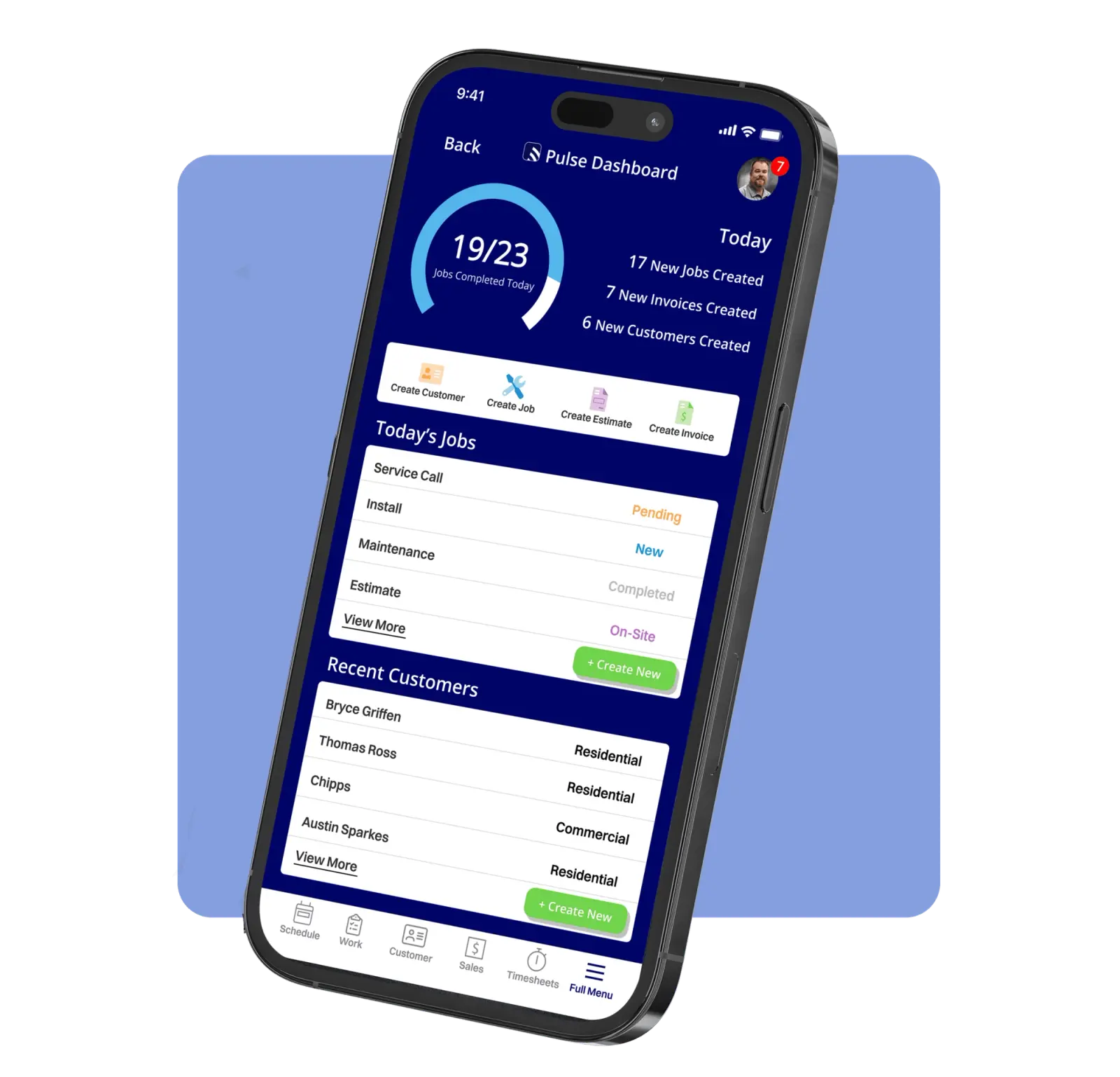
-
Make/model/serial tracking. The appliance record should live on the customer and equipment profile, with full service history attached. Every visit should pull from that record instead of starting from scratch.
-
Parts and inventory tracking. Your software should track parts across your warehouse and your vans, flag low stock, and hold a job open while a part is on order. Repeat service visits caused by missing parts reduce technician daily job capacity by 20–30%, so parts tracking directly protects your schedule.
-
Return visit linking. The follow-up visit must attach to the original diagnosis, the part ordered, and the same job record. If the software treats the return visit as a new job, you lose the history.
-
Warranty and flat-rate pricing. Your software needs to distinguish warranty work from customer-pay work and invoice each correctly. Flat-rate pricing should be configurable by job type, with the option to apply a diagnostic fee toward the repair total.
-
Mobile field app with offline access. Your techs work in basements, attics, and rural service areas where signal drops. FieldPulse caches the last week of jobs, projects, customers, estimates, and invoices on the device. If signal drops mid-edit, the active draft transitions automatically to an offline draft. Everything entered offline saves locally and syncs when the device is back in signal, so techs can complete a majority of the job without cell signal.
-
Two-way QuickBooks Online sync. Customers, line items, estimates, invoices, payments, purchase orders with full line-item detail, and vendors sync both ways. Timesheets flow into QuickBooks Online when a tech clocks out. A correction made in QuickBooks carries back into FieldPulse instead of being overwritten, which ends double data entry.
-
Custom workflows. Your team should define its own job stages and required actions. Appliance repair has distinct stages such as diagnosis, parts order, return visit, and warranty paperwork, and your software should reflect that.
-
Spanish-language mobile app. The FieldPulse mobile app is available in Spanish, translating the interface from navigation to record labels. It is enabled per user by the FieldPulse team, is available on the mobile app only, and does not translate notes or comments. A mixed-language crew follows the same jobs and workflow stages in the language each tech prefers.
Walk Through This Checklist in a Live Demo
Why Generic Field Service Software Falls Short for Appliance Repair
Generic FSM software is built around a single-visit model. A job comes in, a tech is dispatched, and the job closes. That model fits HVAC maintenance or a simple plumbing service call, but it does not match appliance repair.
Here is where the fit breaks operationally:
-
No clean way to hold a job open across a parts order. A generic tool closes the job or leaves it in a vague “on hold” status with no way to track what it is waiting for, who ordered the part, when it is expected, or when to schedule the return visit.
-
Equipment records built for installed systems instead of portable units. HVAC and plumbing tools track equipment tied to a property, such as a furnace or a water heater. Appliance repair tracks units that move between customers, have their own serial numbers, and carry manufacturer warranty status that changes the invoicing workflow.
-
No warranty vs. customer-pay distinction. Generic tools treat every job the same way. Appliance repair needs different documentation, approvals, and invoicing for warranty work, and a tool that cannot separate them creates errors that cost time and money.
The deeper problem is fragmented workflow. Information lives in too many disconnected places, such as a calendar, a text thread, a spreadsheet for parts, and a separate invoicing tool. Even a fully digital business running on disconnected systems faces the same issue as a manual one. Information moves through people instead of through a dependable process, and growth outpaces process development.
Why FieldPulse Is the Right Fit for Growing Appliance Repair Teams
That gap between your workflow and generic tools is exactly what FieldPulse closes. FieldPulse is built for established, team-based service businesses in the 7-to-50-technician range. It connects your office and your field around one current set of job, customer, workflow, and payment information. For appliance repair teams specifically, here is what that looks like.
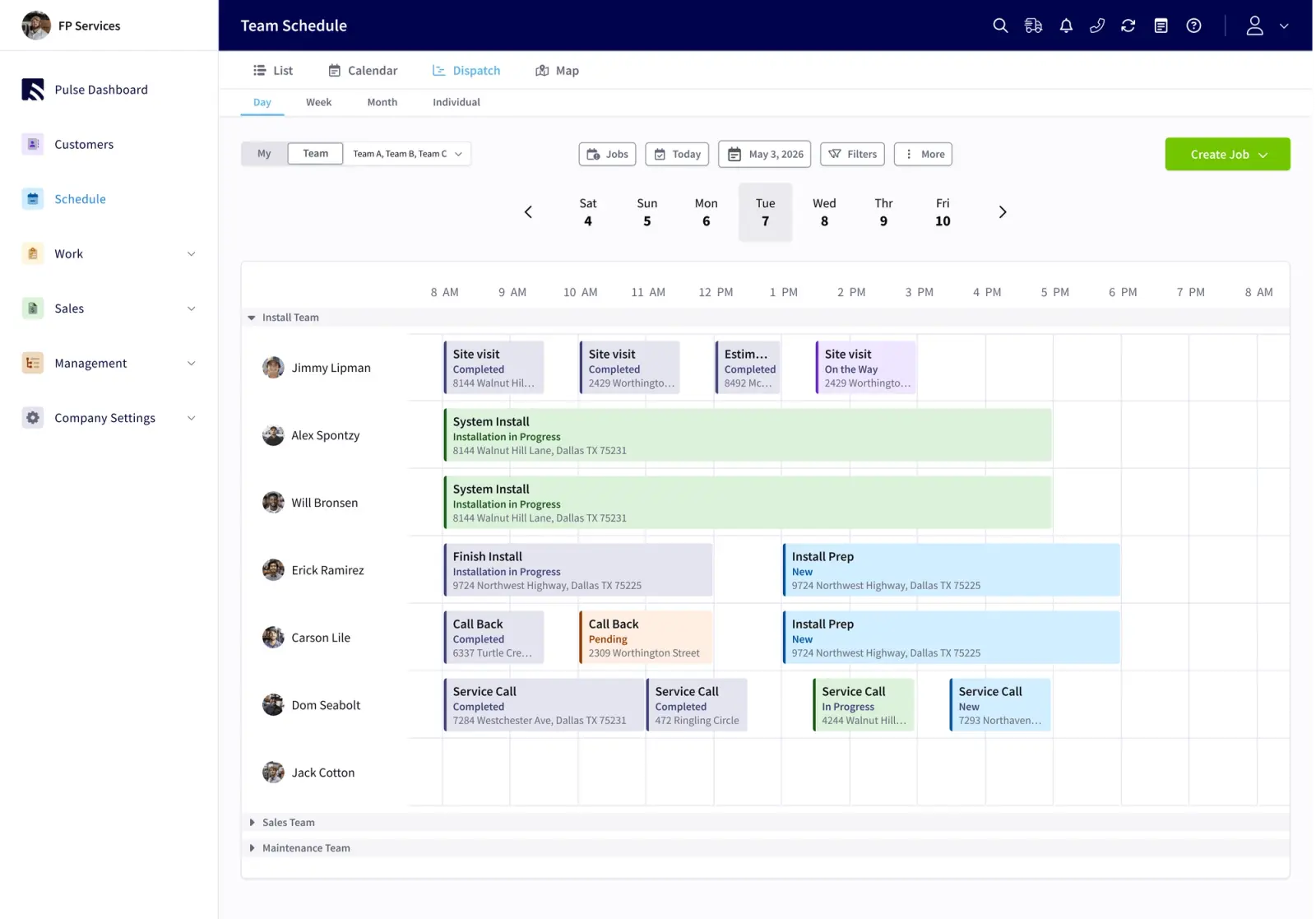
ClearPath turns your process into a guided workflow. ClearPath is included in the core platform. It lets your office define the stages a job moves through and the required actions at each stage. For appliance repair, that often looks like this:
-
Diagnosis stage. Required action: record make, model, serial, and diagnosis notes. Responsible role: technician.
-
Parts ordered stage. Required action: log part number and expected arrival date. Responsible role: office administrator.
-
Return visit stage. Required action: link to original diagnosis and confirm the part is on hand. Responsible role: technician.
-
Warranty paperwork stage. Required action: attach warranty claim documentation. Responsible role: office administrator.
Your office sees the job’s current stage without calling the tech. Your tech sees only what the current stage requires. This structure keeps work from falling through the gap between visits.
Inventory management with parts and materials tracking. FieldPulse offers inventory management as an add-on with parts and materials tracking, barcode scanning, low-stock alerts, and serialized inventory. Asset and equipment records carry serial numbers, custom asset tagging, and installation history, so your tech arrives at a repeat visit already knowing what has been done to that unit.
Job costing that shows which work is profitable. You know a job’s expected profit margin before you dispatch it. Labor, materials, and overhead are tracked as the work happens. At completion, you see actual profit with per-job profit and loss and line-item cost, price, and profit breakdowns, which helps you judge warranty work at negotiated rates.
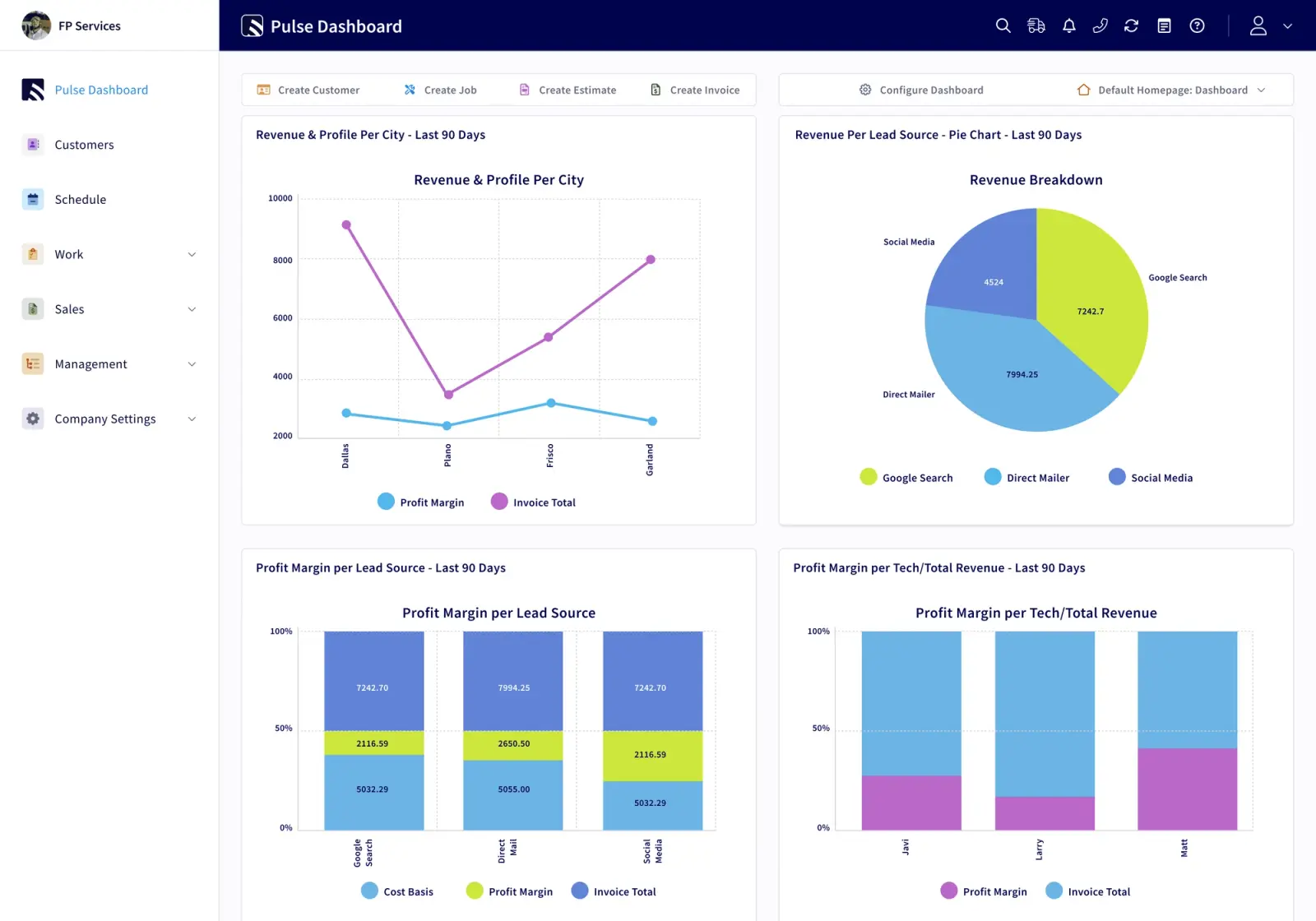
The mobile app in Spanish. The FieldPulse team enables Spanish per user, so your Spanish-speaking techs follow the same ClearPath stages as the rest of your crew in the language they use most comfortably.
Two-way QuickBooks Online sync. Customers, estimates, invoices, payments, purchase orders, and vendors sync both ways. Timesheets flow in when a tech clocks out. This setup removes rekeying and avoids a month-end reconciliation project.
Support and implementation. Onboarding typically runs two to six weeks depending on your team size, which capabilities you enable, how much data needs to migrate, and how your accounting setup is handled. An implementation manager runs recurring working sessions with you through the process.
FieldPulse holds a 4.8 out of 5 aggregate rating across major review sites. Customers report significant operational gains: office teams save 40+ hours per month, field teams see a 50% increase in on-time delivery, and businesses add 16+ customers every month.
Qualified Plumbing LLC in Keaau, HI, an 11-to-25-employee team, saved 7–9 hours per week and saw a 23% increase in revenue after switching to FieldPulse. Their office secretary summed it up clearly: “You folks had everything in one bundle for a great price. Competitors wanted you to add items à la carte for an additional price.”
Fair Comfort Solutions owner Sal Gutierrez cut estimate creation time by 98%, from 4–8 hours per quote down to 4–8 minutes, after switching to FieldPulse.
Talk With FieldPulse About Your Appliance Workflow
The Return Visit Problem: How Software Can Help
The return visit is where most appliance repair software fails. A tech diagnoses the unit on visit one and a part gets ordered. In a generic tool, the job either closes or sits in a catch-all “on hold” status. When the part arrives and the return visit is scheduled, there is no clean link back to the original diagnosis. The tech arrives without context, the office does not know what the job was waiting for, and the part number, prior labor, and diagnosis notes are gone.
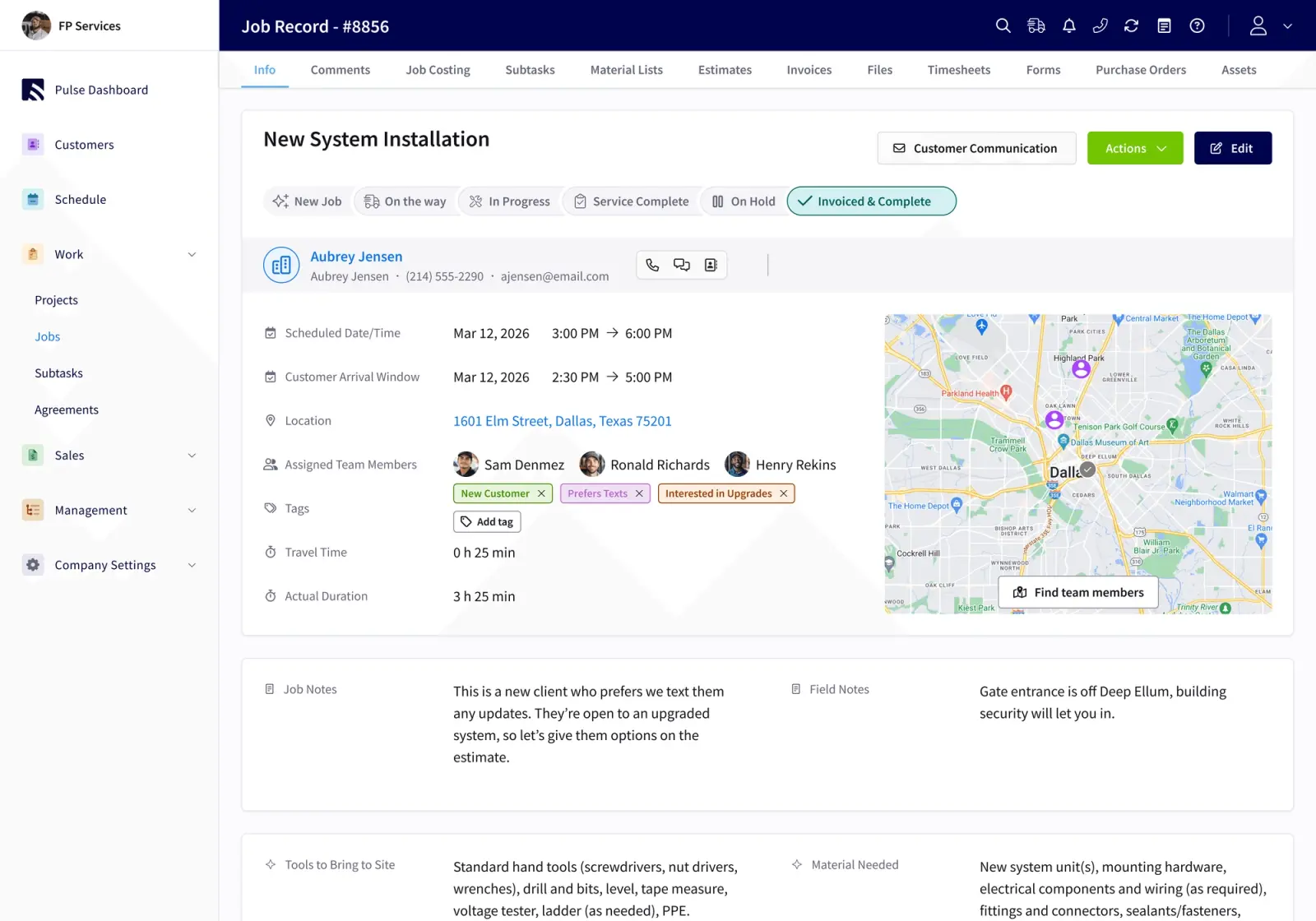
ClearPath solves this structurally. The job stays open across the parts order because the “parts ordered” stage holds it there. The required action at that stage, logging the part number and expected arrival date, keeps the information in the job record. When the return visit is scheduled, the tech opens the same job record and sees the original diagnosis, the part that was ordered, and the prior visit notes. The office sees the job’s current stage on the scheduling board without making a phone call.
The equipment record carries the make, model, serial number, and full service history. A serial number should not live only on a warranty card photo. It should be connected to the customer, the appliance, the warranty status, and every service ticket ever opened on that unit. That connection turns the return visit into a continuation of the original job.
Warranty Vs. Customer-Pay: What Your Software Needs To Track
Warranty work and customer-pay work look similar from the outside. A tech shows up, diagnoses an appliance, and completes a repair. Behind the scenes, the paperwork, approvals, and invoicing differ completely.
On a warranty job, the technician diagnoses the problem and submits a report to the warranty company, which makes the coverage decision. The tech does not authorize the repair. Your software needs to hold the job open while approval is pending, attach the warranty claim documentation to the job record, and invoice the warranty company separately from any customer-pay portion.
On a customer-pay job, the workflow is more direct: diagnose, quote, get approval, complete the repair, and invoice. Most experienced appliance repair operators use a flat diagnostic fee credited toward the repair, flat-rate pricing for any repair in the price book, and hourly billing for anything outside it.
Custom job stages in FieldPulse let your office define separate workflows for warranty and customer-pay jobs. The required actions at each stage, and the role responsible for completing them, are different for each job type. Job costing shows which work is profitable at the line-item level, so you can see how warranty work at negotiated rates compares to customer-pay work at retail rates.
For legal, tax, and compliance questions about warranty obligations and coverage, consult your own advisors and the relevant authorities. The Magnuson-Moss Warranty Act framework from the U.S. Federal Trade Commission governs appliance warranty service in the United States. Your software’s job is to document and track, not to make coverage decisions.
A Buyer’s Checklist for Your Demo
Bring these questions to every vendor you evaluate. The answers reveal how well each platform fits your appliance workflow.
-
Show how a job stays open across a parts order. Explain what the office sees while the part is on order and what the tech sees when the return visit is scheduled.
-
Explain where make, model, and serial number live. Confirm whether it is on the equipment record, the job record, or both, and whether it survives a reschedule.
-
Walk through how a return visit links back to the original diagnosis from start to finish.
-
Show how the system distinguishes warranty work from customer-pay work and whether you can define separate job stages and required actions for each.
-
Describe what happens when a tech loses signal in a basement or a rural area and what they can and cannot do offline.
-
Show how the inventory system tracks parts across vans and the warehouse and how you see what is committed to a job versus what is actually available.
-
Demonstrate the QuickBooks Online sync. Confirm what syncs in both directions, and answer this diagnostic question from FieldPulse: When your admin corrects something in QuickBooks Online, how does that fix get back into your field service software?
-
Confirm whether you can define your own job stages and required actions or if you must adopt a fixed process.
Run a real job through the demo, including a two-visit parts job, a warranty job, and a customer-pay job. Software that cannot handle all three cleanly is not built for appliance repair.
Frequently Asked Questions
How Is Appliance Repair Software Different From General Field Service Software?
As covered earlier, appliance repair centers on a two-visit workflow with a parts order in between. Effective software holds the job open across that gap, links the return visit to the original diagnosis, and carries make, model, serial, and service history through both visits. It also supports clear warranty vs. customer-pay workflows with different documentation, approvals, and invoicing.
How Should Software Handle Parts and Inventory for Appliance Repair?
Strong appliance repair software tracks parts across your warehouse and vans, flags low stock, and ties parts consumption to specific job records. When a tech uses a part on a job, it should deduct from inventory and appear on the invoice without manual re-entry. The system should also support holding a job open while a part is on order, with the part number and expected arrival date logged against the job record. Barcode scanning and serialized inventory tracking help keep counts accurate as parts move between locations.
How Do Return Visits Stay Linked to the Original Diagnosis?
In FieldPulse, ClearPath keeps the job open in a defined “parts ordered” stage until the part arrives and the return visit is scheduled. The office logs the part number, supplier, and expected arrival. When the return visit is booked, the tech opens the same job record and sees the original diagnosis notes, the part that was ordered, and the prior visit history. The equipment record holds make, model, serial, and full service history, so the return visit continues the original job.
How Does Software Track Warranty vs. Customer-Pay Work?
Warranty and customer-pay work use different job stages, required actions, and invoicing. On a warranty job, the tech submits a diagnosis report to the warranty company, which makes the coverage decision. The software holds the job open while approval is pending, attaches warranty claim documentation, and invoices the warranty company separately from any customer-pay portion. On a customer-pay job, the workflow moves from diagnosis to quote to approval to invoice. Custom job stages in FieldPulse let your office define separate workflows for each job type with clear responsibilities.
How Long Does Implementation Usually Take?
Onboarding typically runs two to six weeks. Timing depends on your team size, which capabilities you enable, how much data needs to migrate, and how your accounting setup is handled. The usual sequence is: scope the work, get an implementation manager and recurring sessions, configure the foundation, move data and connect QuickBooks Online, train each role, then transition to ongoing support.
Does the Mobile App Work Without Signal?
FieldPulse caches the last week of jobs, projects, customers, estimates, and invoices on the device. In areas with no signal, such as basements, rural service areas, and mechanical rooms, your techs can view cached jobs, add notes and photos, update job statuses, and clock in and out. If signal drops mid-edit, the active draft becomes an offline draft. Everything entered offline saves locally and syncs when the device is back in signal, so techs can complete a majority of the job without cell service.
Is the App Available in Spanish?
The FieldPulse mobile app is available in Spanish. It translates the interface so Spanish-speaking techs can follow the same job stages as the rest of your crew in the language they use most comfortably. It is enabled per user by the FieldPulse team, so one tech can run the app in Spanish while the rest of the crew runs it in English. The Spanish option is on the mobile app only, and notes and comments appear in the language they were written in.
Conclusion and Next Steps
The right appliance repair software understands your workflow. It supports the two-visit cycle, the parts order in the middle, the return visit that must link back to the original diagnosis, and the warranty vs. customer-pay distinction that shapes documentation and invoicing.
Before you evaluate platforms, document your current process. Map what happens between visit one and visit two. Call out where jobs get lost, where parts go untracked, and where warranty paperwork creates delays. Then take that map into every demo and run a real job through the software, including a two-visit parts job and a warranty job.
Get input from your office administrator and at least one tech. Your office administrator is the adoption gatekeeper. If the scheduling board, the parts-pending list, and the QuickBooks sync do not make their day easier, the rollout will not hold. Your tech’s first week on the mobile app often decides whether the implementation sticks.
FieldPulse is built for growing appliance repair teams in the 7-to-50-technician range. It connects your office and your field around one current set of job, customer, workflow, and payment information and is built to grow with you.
Ready to see how FieldPulse fits your appliance repair workflow?