









Key Takeaways
-
Electrical contractor invoicing breaks operationally when field details like parts, labor, and change orders stay trapped in text threads or access files instead of flowing into a connected workflow.
-
Manual re-entry between estimates, invoices, and QuickBooks creates delays, errors, and lost revenue. Top performers close this gap by sending invoices from the field the same day.
-
Effective electrical invoicing software needs mobile invoicing, estimate-to-invoice conversion, a standardized pricebook, progress billing, on-site payments, and two-way QuickBooks sync.
-
With connected tools, contractors shorten collection time from about a month to under two weeks and cut admin time sharply.
-
FieldPulse connects the entire job workflow so the invoice becomes the automatic last step for electrical teams in the 7-to-50-technician range.
What Matters Most in Electrical Contractor Invoicing Software
You need invoicing software that matches how electrical work actually runs in the field and in your office. These are the core capabilities that make the biggest difference for your team:
-
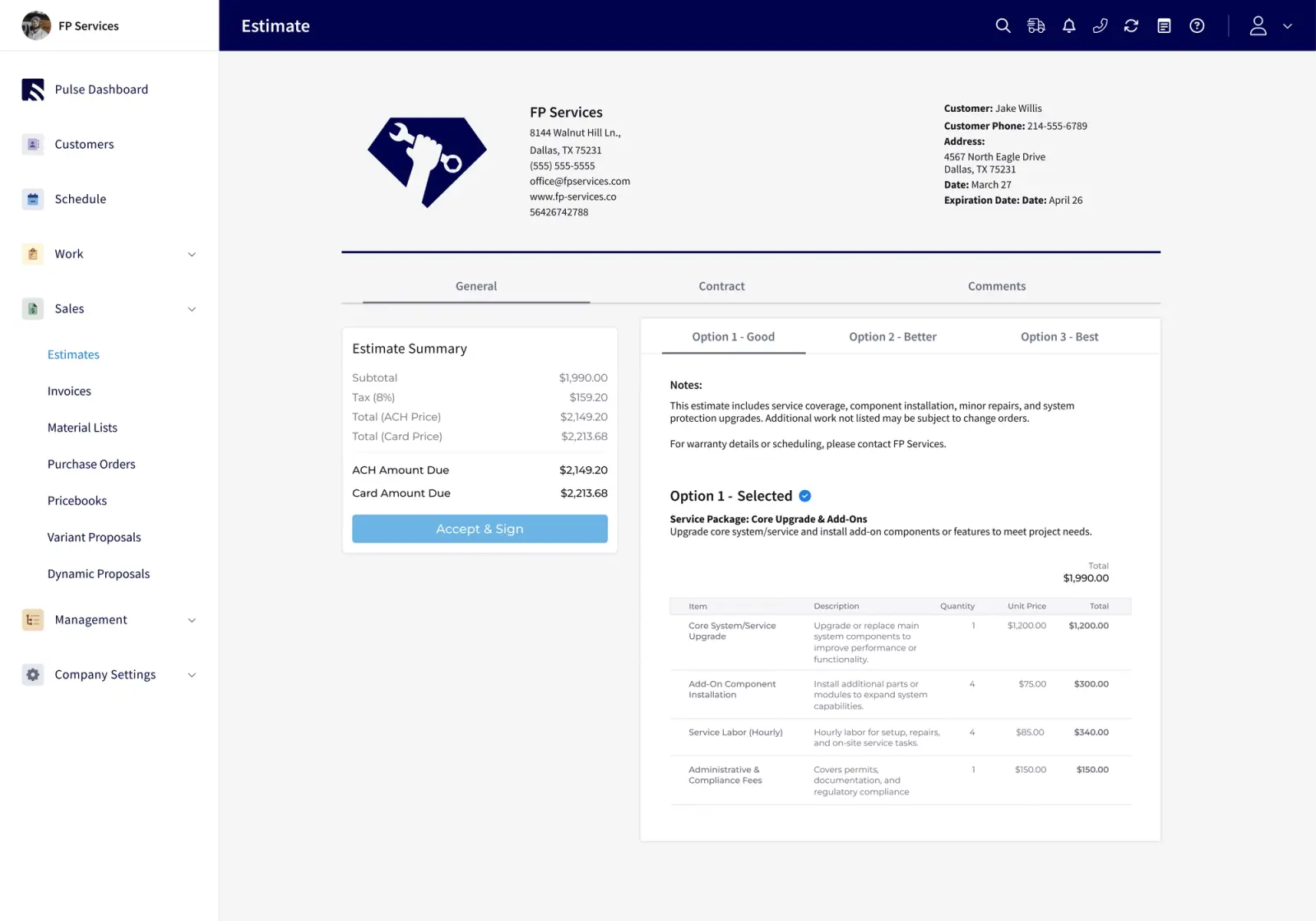
Mobile invoicing from the field. Your tech builds and sends the invoice on site before leaving the driveway, using preset pricing for panel upgrades, EV chargers, and service calls.
-
Estimate-to-invoice conversion without re-entry. The approved estimate becomes the invoice, so no one retypes line items. Manually re-entering estimate data into invoices wastes 15 to 30 minutes per job and introduces errors, which is why estimate-to-invoice conversion is considered the single most important feature in electrical contractor invoicing software.
-
A pricebook for electrical work. Standard pricing for services, materials, and labor keeps two electricians quoting the same panel upgrade the same way. This is what keeps your profit margin predictable.
-
Progress billing and deposits. Support for multi-stage electrical jobs where payment comes in milestones. Your team can take a deposit at booking, a progress payment at rough-in, and the balance at final inspection.
-
On-site payment collection. Card and ACH capture happen before your tech leaves the job. You can also send Pay Now links by text or email.
-
Two-way QuickBooks Online sync. Customers, line items, estimates, invoices, payments, purchase orders, and vendors sync both ways. Timesheets flow into QuickBooks Online when a tech clocks out. This works with QuickBooks Online Essentials, Plus, and Advanced in the US, Canada, and Australia.
-
Job costing. You estimate your profit margin upfront and confirm actual profit after completion, with per-job profit and loss plus line-item cost, price, and profit breakdowns.
-
Offline capability. The mobile app caches the past week of jobs, customers, estimates, and invoices on the device. Techs can complete a majority of the job without cell signal in basements, rural properties, or other low-signal areas. Notes, photos, status changes, and timesheets save locally and sync when signal returns.
For a deeper look at how these capabilities fit together for electrical teams, see Best Electrical Contractor Software for Growing Teams and Electrical Contractor Software: A Decision Framework.
See Invoicing Workflows in a Live Demo
How FieldPulse Connects Electrical Invoicing to Your Workflow
FieldPulse is built for electrical teams in the 7-to-50-technician range. The platform connects estimate, field work, invoice, payment, and accounting so the invoice becomes the automatic last step of the job. Here is how the main pieces support your process:
-
ClearPath (included in core). ClearPath turns your process into job stages with required actions at each stage. For a panel upgrade, you can require a photo of the completed panel, a customer signature, and a checklist before the job moves to invoicing. ClearPath’s Mobile Focus View shows your tech only what the current stage needs, with single-tap Action Buttons. Your team has fewer steps to remember and closes jobs faster.
-
Pricebook (add-on). The pricebook holds standard pricing for electrical services, materials, and labor and updates in real time across every user and location. Techs build estimates for panel upgrades and EV charger installs in minutes from preset pricing, including good-better-best options.
-
Mobile invoicing and payments. Your tech converts the estimate to an invoice on site, collects card or ACH payment before leaving, or sends a Pay Now link. Payments auto-link to the right invoice, job, and customer. Next-Day Funding puts card and validated ACH money in your account the next business day.
-
Two-way QuickBooks Online sync. The sync ends double entry and keeps your accounting aligned. As noted earlier, corrections in QuickBooks Online carry back into FieldPulse instead of being overwritten. Tax rates come from QuickBooks Online, and invoice numbering can follow your existing sequence.
-
Job costing. Techs clock in against the job itself, so labor hours tie to specific electrical work. You know a job’s expected profit margin before you dispatch it, and you confirm actual profit when it closes.
-
Support and implementation. Implementation typically takes two to six weeks, with an implementation manager guiding your team through recurring working sessions.
Stewart Electrical Contracting, with Colby Bruce as Operations Manager, reported 30% fewer missed appointments, more than 5 hours saved on admin work weekly, and over 4 additional jobs added weekly after moving to FieldPulse. As Colby put it: “FieldPulse has been helpful with our growing pains, letting us easily manage and keep track of our work.”
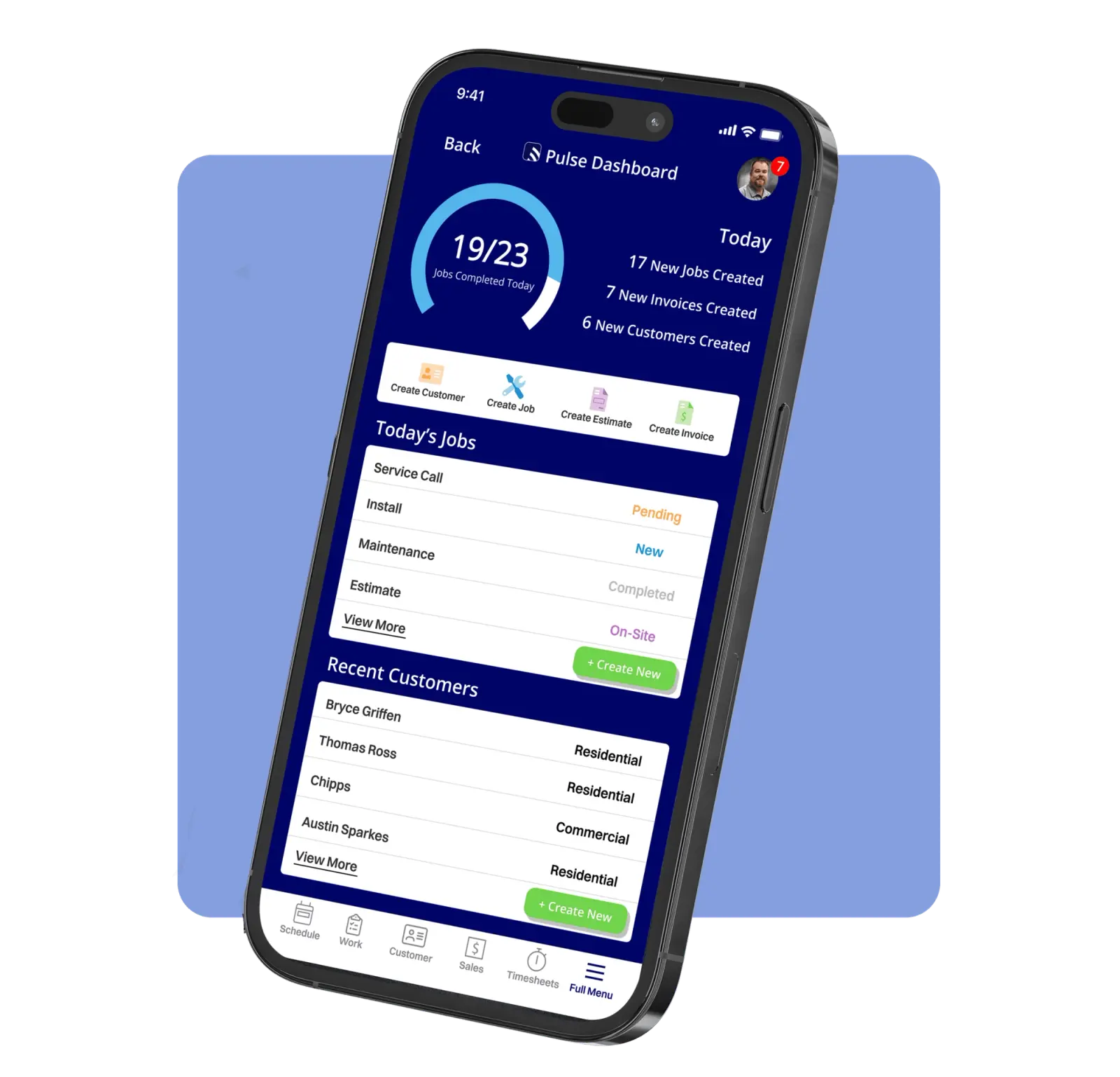
For more on how the mobile app fits into an electrical team’s daily workflow, see the Mobile App for Electrical Service Technicians: Buyer’s Guide. To see how scheduling connects to invoicing, Scheduling Software for Electrical Contractors covers that workflow in detail.
QuickBooks Integration for Electrical Contractor Invoicing
You already saw how FieldPulse’s two-way sync ends double entry. Here is what that looks like in practice when you connect to QuickBooks Online.
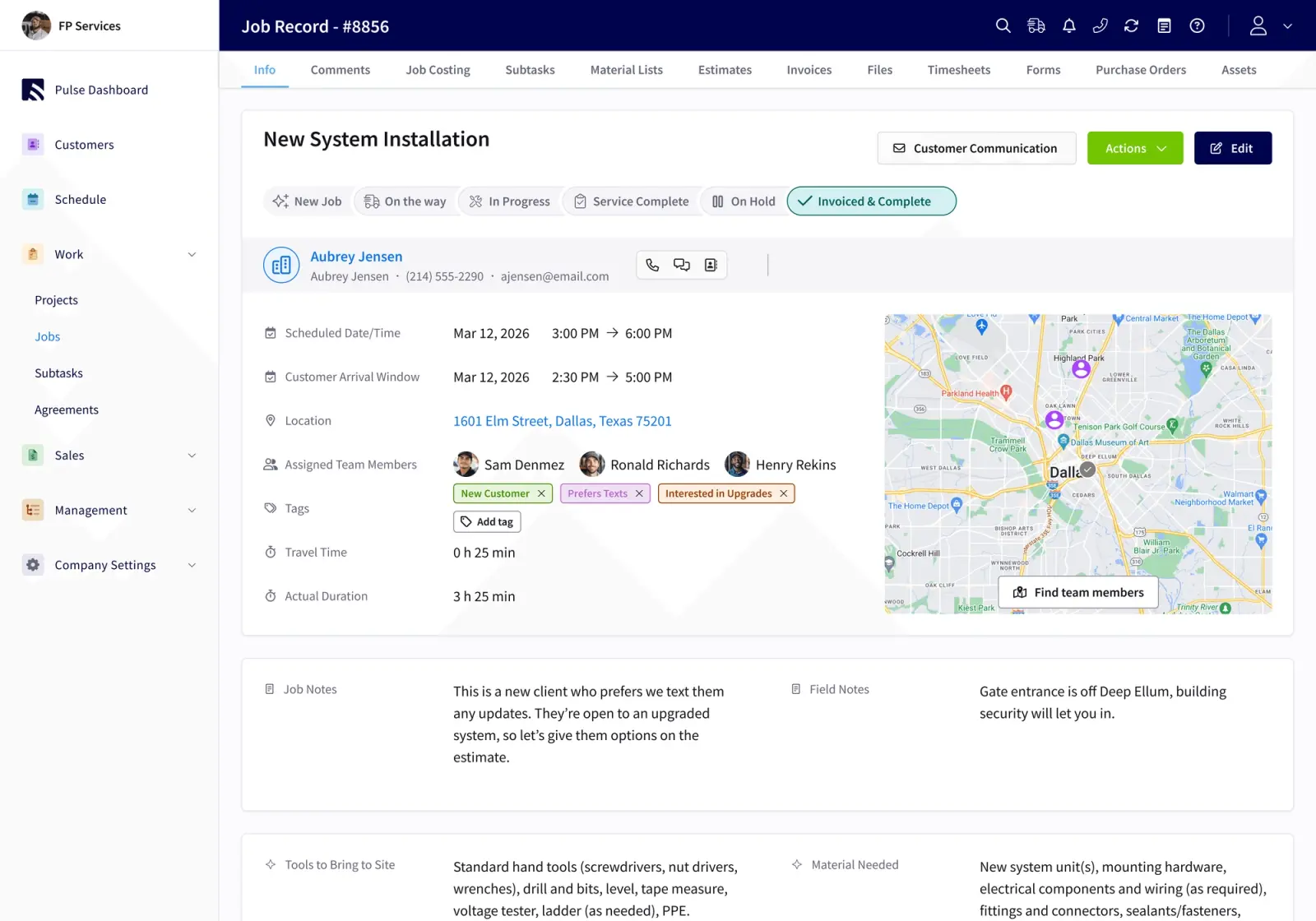
The following records sync in both directions between FieldPulse and QuickBooks Online:
-
Customers and line items
-
Estimates and invoices
-
Payments
-
Purchase orders, with full line-item detail
-
Vendors
These items flow from FieldPulse into QuickBooks Online as your team works:
-
Timesheets, triggered when a tech clocks out
-
Your existing QuickBooks Online data, imported when you connect
Your existing QuickBooks Online customers and records come with you when you connect, so you are not rebuilding a customer list from scratch. From there, the sync keeps the details aligned. Tax rates come from QuickBooks Online so charges match your books, invoice numbering can follow your existing sequence, and payments follow the standard QuickBooks Online flow of invoice, payment, then undeposited funds.
FieldPulse also supports QuickBooks Desktop for businesses whose books have not moved to QuickBooks Online. Manual data re-entry between field service software and QuickBooks costs the average 5-truck residential contractor 6 to 10 administrative hours per week, which a real two-way sync removes from your workload.
For more on how job profitability connects to your accounting workflow, that guide walks through the full picture.
If you are still weighing your options, these are the questions electrical contractors ask most often before choosing invoicing software.
Frequently Asked Questions
What Is the Best Invoicing Software for Electrical Contractors?
For teams in the 7-to-50-technician range, FieldPulse connects the whole job workflow of estimate, field work, invoice, payment, and QuickBooks sync so the invoice becomes the automatic last step of the job. The key is finding a platform where the invoice flows naturally from the work that was done, without anyone retyping information that already exists in the system.
How Do Electrical Contractors Invoice from the Field?
With mobile invoicing software, your tech builds the invoice from preset pricing on their phone, converts the approved estimate directly to an invoice, and collects card or ACH payment before leaving the job site. A Pay Now link can also be sent by text or email if the customer is not present. The invoice syncs to your office and to QuickBooks automatically, so your team avoids re-entry and chasing payments.
How Does Invoicing Software Handle Progress Billing on a Panel Upgrade?
The job record holds the deposit, milestone billing, and final invoice in one place. With ClearPath, you can require sign-off at each stage before the job moves forward. For example, you can require a customer signature and a completed checklist before the job moves from rough-in to final billing. The billing trigger becomes part of your workflow, so your team sends the next invoice on time.
What Happens to My Books When I Switch Invoicing Software?
With FieldPulse, your existing QuickBooks Online customers and records come with you when you connect. The two-way sync keeps both systems aligned going forward. Customers, invoices, payments, purchase orders, and vendors sync in both directions, and corrections made in QuickBooks Online carry back into FieldPulse instead of being overwritten.
How Long Does Implementation Take?
Most teams complete implementation in two to six weeks, depending on team size, which capabilities you enable, how much data needs to migrate, and how your accounting is set up. An implementation manager runs recurring working sessions with your team. The process follows clear phases: configure the foundation, move data, connect QuickBooks Online, then train each role so your team adopts the system smoothly.
The Invoice Is the Last Mile of the Job
Invoicing breaks operationally when your field and office work from different information. The tech knows what happened on the job, and the office knows what was quoted. When those two views do not connect automatically, the invoice goes out late, the change order gets missed, and the payment sits uncollected on work you already completed.
The fix is a connected workflow where the invoice is generated automatically as the job closes. Your team needs mobile invoicing, estimate-to-invoice conversion, a pricebook that standardizes pricing across your team, progress billing for multi-stage jobs, on-site payment collection, and a two-way QuickBooks sync that keeps your books and your field service software in agreement.
FieldPulse connects all of this for electrical teams in that range. See how it works for your operation.
See How FieldPulse Connects Your Invoicing