









Key Takeaways
- Buyers value locksmith businesses based on clean, verifiable software records that prove recurring revenue and operational transferability rather than physical assets.
- Start preparing six months before a sale by reconciling financials, cleaning customer data, documenting contracts, and creating an operations manual.
- Buyers will request specific reports including P&L statements, accounts receivable aging, job volume by type, revenue by service category, and customer concentration metrics.
- Commercial recurring contracts command premium valuations only when properly documented with renewal history, profitability data, and transferability details.
- FieldPulse centralizes job records, customer’s history, timesheets, inventory, and reporting so the documentation buyers require already exists in one transferable system.
See How FieldPulse Prepares You For A Sale
Why Software Data Drives Locksmith Business Valuation
A buyer underwrites three things: revenue continuity, customer transferability, and operational transferability. All three are proven from software records, and a walkthrough of your shop cannot verify them.
A locksmith business that runs on the owner’s memory of which property managers renew, which master key systems are live, and which transponder stock is on the shelf is an owner-dependent business. Owner-dependent businesses are harder to value and harder to close, because the buyer cannot verify what they are buying without the seller staying involved indefinitely.
Clean records do not automatically raise your valuation. They increase buyer confidence in the evidence supporting it. That confidence keeps the price from being negotiated down during exclusivity. Exclusivity is the period after a letter of intent is signed when the buyer’s accountant works through your books and looks for reasons to adjust the offer.
Buyers view a modern field service platform as proof of platform-readiness, while a shop running on disconnected tools signals an owner-dependent operation that requires meaningful post-close integration cost. That distinction shows up in the multiple, which is why the work of preparing your records starts long before a buyer ever sees them.
How To Prepare Your Locksmith Software For A Sale
The steps below are sequenced by priority. Start six months out and work through them in order.
- Pull your financial reports first. Generate profit and loss, accounts receivable aging, and monthly job volume from your accounting platform before touching anything else. These reports become the baseline that every later step gets checked against.
- Reconcile your books to your bank deposits. A three-way reconciliation across the P&L, tax returns, and bank statements is the first thing a buyer’s accountant will test, and an unexplained gap between bank deposits and P&L revenue is the most common sign that a small business income statement has been manipulated.
- Clean up your customer and job history. Deduplicate old leads, remove personal and non-business records, and tag recurring commercial accounts so they can be counted separately from one-off residential work.
- Document your locksmith-specific data assets. Keying records, master key charts, transponder and remote inventory counts, key blank stock, and commercial maintenance contracts are the transferable data of a locksmith business. Sloppy inventory documentation signals broader operational sloppiness and compresses the sale multiple.
- Write down how the business runs on the software. Create a short operations manual that shows how a job moves from call to invoice, which roles handle each step, and which screens your team uses. This connects your software records to the daily workflow a buyer will inherit.
- Build the report package a buyer will request. Assemble every report in one folder, in the order buyers usually ask for them, so you are not scrambling during diligence.
- Prepare account and credential handover. Confirm you own the master admin account, understand how licenses transfer, and know which platforms have assignment limits before closing day.
See What Your Jobs Are Really Earning With FieldPulse
Reports Buyers Expect During Locksmith Due Diligence
The order matters. Buyers work through these in sequence, and a gap at any stage creates a reason to adjust the offer. Here is what to prepare and how to pull it:
- Profit and loss, dated within the last 180 days plus trailing twelve months monthly. Pull this from QuickBooks Online or Xero. Buyers typically request P&L statements dated within the last 180 days plus trailing 12 months monthly, and this is the document everything else gets checked against.
- Accounts receivable aging. Pull from the same accounting platform. A material climb in receivables over 90 days triggers buyer scrutiny of cash quality, and receivables older than normal invite a price adjustment.
- Monthly job volume and average ticket, by job type. Pull this from your field service software. A buyer wants to see residential rekey volume, commercial rekey volume, automotive, access control, and safe work separated, not a single revenue line.
- Revenue by service type. Residential rekey, commercial rekey, automotive, access control, and safe work each carry different profit margins and different buyer interest. This report shows which lines carry profit margin and which do not. Profit margin is the key metric buyers examine.
- Top commercial clients and customer concentration. Present this as top 1, top 3, top 5, and top 10 customers as a percentage of revenue for the last three years and trailing twelve months. Buyers commonly request a ranked customer revenue schedule and concentration metrics over trailing periods. A buyer who cannot get customer-level detail will assume the worst.
- Technician productivity. Pull from timesheets clocked against specific jobs rather than a weekly total. This makes labor hours visible at the job level and lets you prove your profit margins are real.
FieldPulse connects job records, timesheets, and customer’s history in one place, so these reports already exist rather than needing to be reconstructed. The platform offers 60+ prebuilt reports plus custom reports, with dashboards and KPIs covering technician performance, revenue, outstanding invoices, and profitability by job, job type, or customer, pulled directly from the work your team has already done.
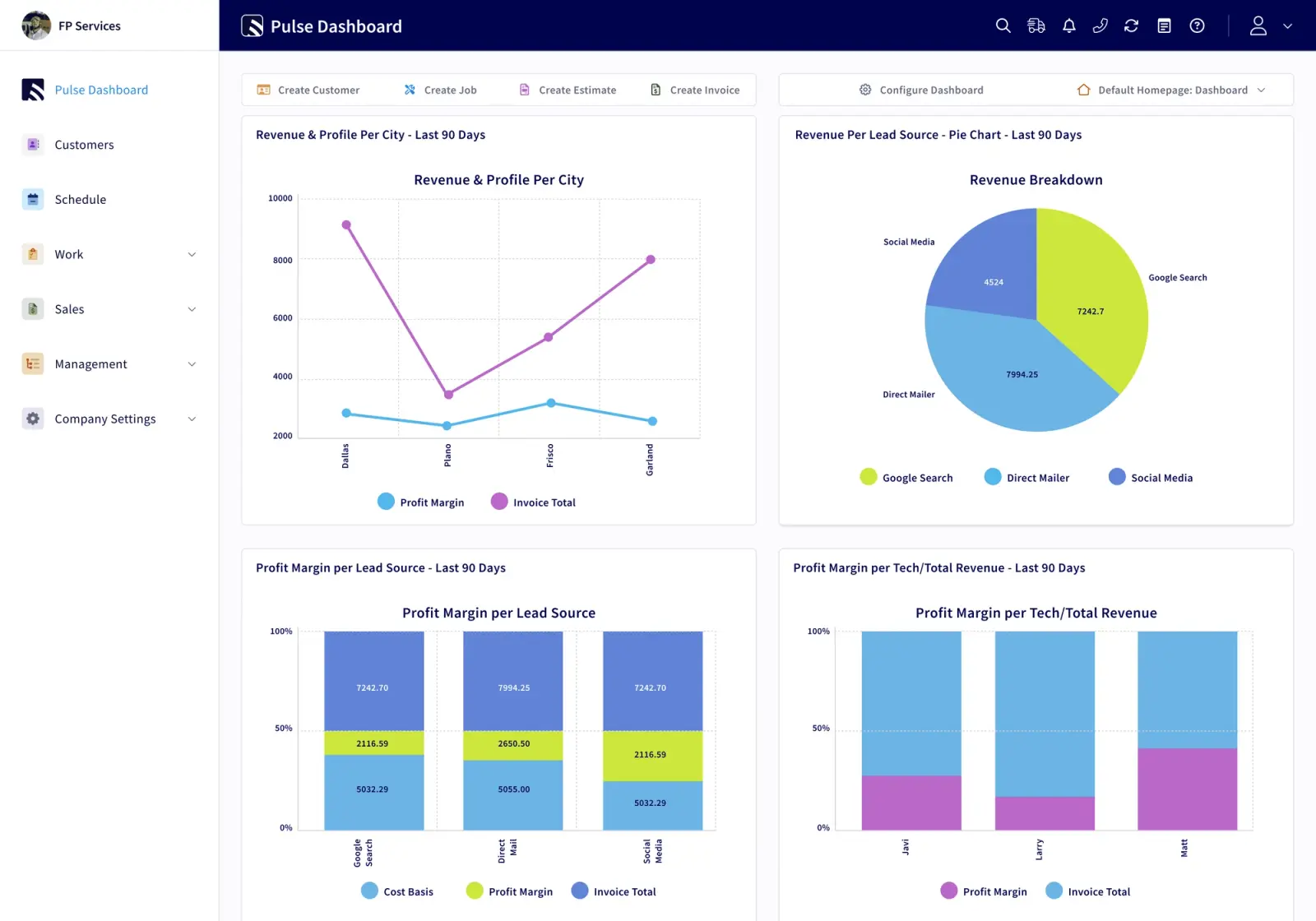
See FieldPulse Reporting In Action
How To Prove Recurring Commercial Revenue From Your Locksmith Software
Commercial maintenance contracts such as access-control maintenance, master key system upkeep, and property management portfolios are what buyers pay a premium for. Commercial recurring service contracts trade at a meaningful EBITDA premium versus residential or automotive lockout work, and that premium only exists if the recurring revenue is documented.
To present your contract book credibly, you need to show buyers that renewals are predictable and profitable. Prepare these four items:
- A current list of all active contracts, with start and renewal dates
- Contract revenue by customer for at least three years
- Renewal history by cohort, with a year-by-year picture of which accounts renewed and which did not
- Gross profit by contract or account, including labor, callbacks, and any warranty burden
Buyers underwrite a five-step sequence for service contracts: identifying the contract book, validating renewal history, analyzing profitability, testing transferability, and deciding how much credit to give the revenue in the multiple. You need documentation for all five steps.
Check one more thing early: if a contract has a change-of-control clause, its concentration number depends on the close surviving. A customer with the right to renegotiate or terminate at change-of-control is a customer whose concentration number is conditional on the close itself surviving. Review assignment language before you go to market.
Cleaning Up Customer And Job History Before A Locksmith Sale
Your customer records are part of what a buyer is purchasing. Before you go to market, work through the following:
- Remove personal and non-business data from customer records, especially anything that belongs in a personal account rather than the business system.
- Tag recurring commercial accounts so they can be counted separately from one-off residential work. A buyer needs to see the commercial base clearly, not buried in a combined list.
- Deduplicate old leads and merge duplicate customer records, including parent and subsidiary accounts that appear as separate customers and understate true concentration.
- Reconcile inventory counts in your management platform to physical stock such as key blanks, cores, pinning kits, and transponder programmers. Sloppy inventory documentation signals broader operational sloppiness to a buyer reviewing your records.
FieldPulse holds customer records, job history, and inventory in one system, so deduplication and tagging happen in the same place your techs are already working, rather than across three disconnected tools.
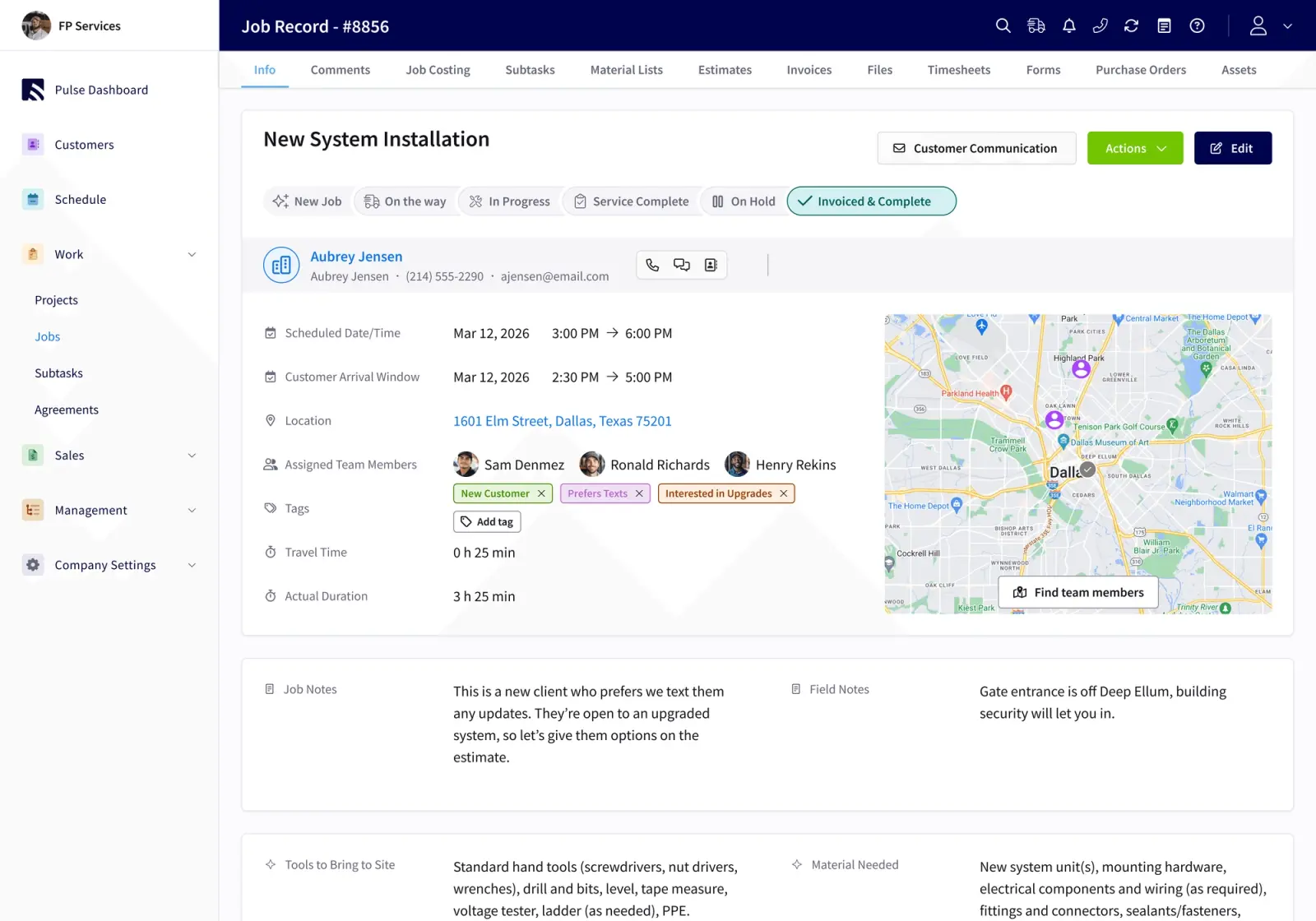
Documenting How Your Locksmith Business Runs On The Software
A short operations manual that shows how a job moves from call to invoice makes your business feel turnkey rather than owner-dependent. Without it, a buyer has to reconstruct your process after closing, and that uncertainty gets priced into the offer.
ClearPath’s Mobile Focus View, included in the core platform, turns your process into office-defined job stages, required actions at each stage, and a mobile view that shows a tech only what the current step needs. That structure means your workflow is documented and transferable, and a buyer does not have to rebuild it from scratch.
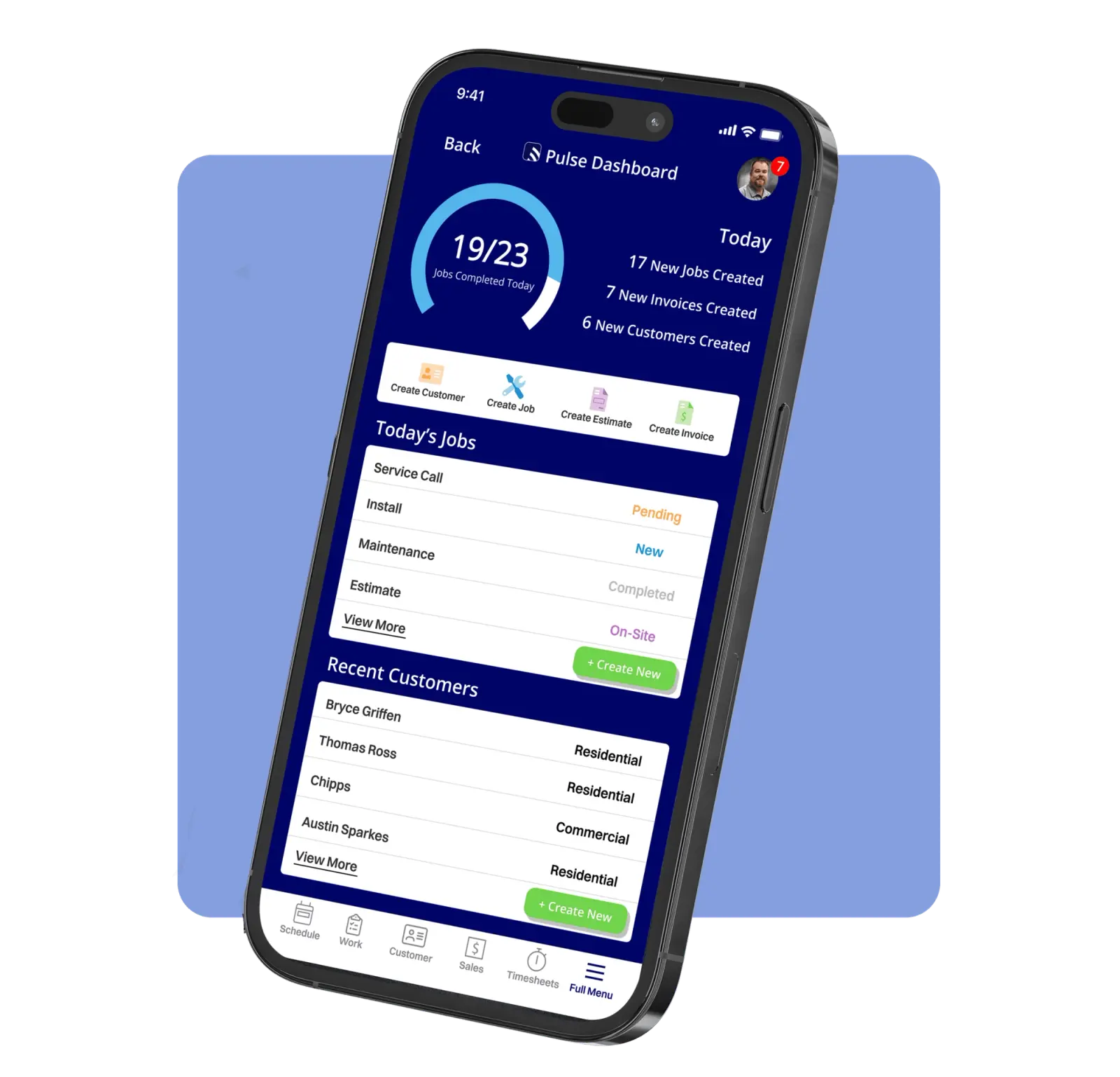
A documented workflow is a valuation point. It is evidence that the business runs on a process, not on the owner’s presence.
How To Transfer Software Accounts And Credentials To A Buyer
Account handover is a closing-day task that requires preparation starting months earlier. Work through the following before you go to market:
- Confirm the business owns the master admin account, not a personal email address. No buyer wants to discover after settlement that the business’s main account is connected to the seller’s personal phone number.
- Inventory every platform, login, license key, and renewal date, and check each for assignment or change-of-control restrictions.
- Note that some software providers restrict account transfers, so the handover may mean changing the verified business owner and administrator rather than formally assigning the account.
- Move any business data living in a personal account into the business account before closing.
- Deliver access as part of a day-one handover binder, alongside keys, supplier logins, and related system credentials.
A business transition plan should include a technology credentials inventory covering all software, platforms, and online accounts, login credentials, license keys and renewal dates, and support contact information for each platform. Build that inventory now, not the week before closing.
Should You Switch Locksmith Software Before Selling?
Do not switch right before a sale. A clean two-to-three-year history in an adequate system is more valuable than a fresh start in a better one.
A buyer underwrites current operations, including the records your current system can produce. An owner who defers a software switch effectively transfers migration cost, implementation time, data cleanup, staff training, and post-close operational drag to the buyer, who will price that risk into the deal. A mid-process migration transfers cost, disruption, and uncertainty onto the buyer’s risk calculation, and buyers price uncertainty downward.
The exception is when your current system cannot produce customer-level revenue detail at all. In that case, the gap in your records is the problem to solve, regardless of which brand is on the invoice. If you cannot pull the reports a buyer will request, the records do not exist in a usable form, and no amount of preparation will substitute for them.
How Long Data Cleanup Usually Takes
Plan on starting six months out. That timeline gives you room to find and fix issues before a buyer’s accountant sees them.
Financial reconciliation across P&L, tax returns, and bank statements and customer history scrubbing are usually the longest tasks. Inventory reconciliation and operations documentation typically take less time but still require deliberate effort. Owners who start cleanup the week before a broker meeting consistently find problems they cannot resolve in time.
What To Do When Business Data Lives In A Personal Account
Move business data into the business account before going to market. A buyer receives ownership of the business’s data at closing, not a shared login to a personal account.
Any business records, customer’s history, or job data living in a personal email, personal cloud storage, or personal software account needs to be migrated to the business account and confirmed there before the sale process begins. Make sure the buyer receives ownership rather than access, and document the transfer as part of your closing checklist.
Conclusion: The Records Are The Asset
The buyer is buying records and a repeatable process. The locksmith who can produce clean reports, documented commercial contracts, and a transferable workflow gets paid for what they built. The locksmith whose records live in three places gets discounted for the uncertainty that creates.
FieldPulse connects your office and your field on one workflow, with job records, customer’s history, timesheets, inventory, and reporting all in the same system your techs are already using. That means the reports a buyer asks for already exist, the workflow is already documented, and the records are already transferable. You are not reconstructing the business for a buyer. You are showing them what you built.
Talk With FieldPulse About Getting Sale-Ready