









Key Takeaways
-
HVAC job costing works when labor hours, materials, equipment, refrigerant, and overhead tie directly to each specific job instead of weekly totals.
-
Without job-level tracking, profit margins look strong at bid stage and only show the real, lower numbers after closeout.
-
Change orders that are not captured in the field with customer authorization turn into unbilled work and large annual revenue leaks.
-
Two-way QuickBooks sync prevents duplicate entry and carries corrections from accounting back into field operations without manual re-entry.
-
FieldPulse provides HVAC job costing software that connects labor, materials, change orders, and two-way QuickBooks sync for 7-to-50-technician shops.
The Job That Did Not Make Money
The sold bid showed a 35% gross profit margin. The closeout showed something closer to 11%. Nobody could reconstruct where the difference went because labor hours were tracked by the week, not by the job.
The technician who spent six hours on a difficult install and the one who finished a simple swap in two hours both showed up as the same weekly labor cost. The job that ran long absorbed nothing extra. The job that ran short contributed nothing back.
The second failure is quieter. The invoice went out eleven days after the work was done. A change order, a refrigerant line reroute the tech handled on the spot, never got billed. The tech did the work, the customer said thanks, and the office never saw it. The original scope went out on the invoice. The extra labor and materials disappeared.
Your tech did the work correctly in both cases. The breakdown sits in how information moves from the field to the office, and from the estimate to the closeout. HVAC job costing software closes that gap when it ties labor hours to specific jobs, captures change orders in the field, and compares what you sold against what you spent.
What Is Job Costing In HVAC?
Job costing in HVAC means tracking every dollar of cost, including labor, materials, equipment, refrigerant, and overhead, against a specific job. You then compare that total to the revenue the job generated.
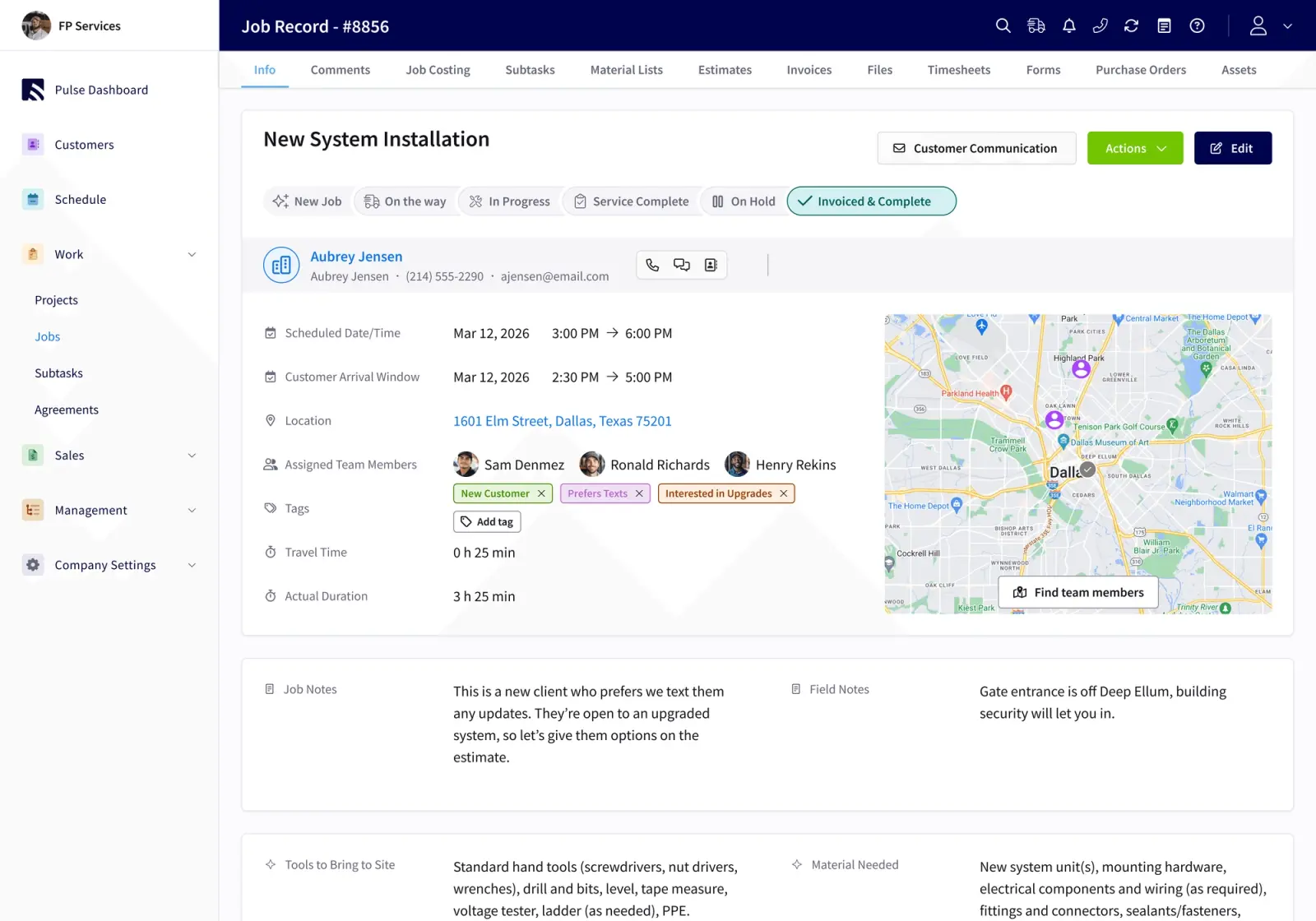
The result is a per-job profit margin that shows exactly what that service call, installation, or maintenance visit actually earned. A weekly labor total does not count as job costing. Without job-level time tracking, labor cost lands as one large number on the P&L each pay period, and every job appears to absorb labor equally.
Three materials cost pools need tracking per job, not as a combined line:
-
Consumable parts and supplies pulled from truck stock, such as capacitors, contactors, and wire nuts, must hit the job record instead of a generic parts expense line.
-
Refrigerant must be logged by pounds used per job. A pound of R-410A cost $8 in 2023 and rose to $25+ in 2025 due to phase-down regulations. Contractors who do not log pounds per job undercost every recharge call.
-
Major equipment needs tracking at the actual purchase cost of the specific unit installed. A 3-ton Carrier condenser and a 3-ton Goodman condenser have very different cost bases.
Overhead also has to land on the job. Steph’s Books describes a percentage-of-revenue overhead allocation method where most contractors allocate 10–15% of job revenue as overhead and recommends 12% of revenue as a starting point for HVAC contractors between $1M and $5M in revenue. A $150 service call absorbs $15–$22. An $8,000 install absorbs $800–$1,200.
The specific method matters less than using it consistently. Job costing breaks when overhead never lands on the job at all.
How Does Labor Burden Get Applied To An HVAC Job?
Labor burden is the cost of employing a technician beyond the wage. It includes payroll taxes, workers’ compensation, benefits, and truck and tool cost.
You apply it by multiplying the hours tracked against each job by the burdened rate for the tech who worked them. A technician earning $30 per hour in base wage typically costs an HVAC business between $38 and $45 per hour fully burdened, depending on the benefit structure and workers’ compensation rate.
The components that make up that burden typically include:
-
Workers’ compensation insurance, typically $5–$11 per $100 of payroll for HVAC trades depending on state and loss history
-
Health insurance contributions
-
Paid time off accrual
-
Vehicle, fuel, and tool costs
-
Training and certification costs such as EPA 608 and NATE
The resulting labor cost flows into the job’s profitability calculation alongside material, equipment, and other direct costs. Bidding a job at $30 per hour when the real cost is $42 per hour understates labor cost by roughly 40 percent. That gap is where job profit margin goes to hide.
Estimated Vs. Actual At Closeout
The sold bid needs to be the baseline. When you compare actual costs against anything other than what you quoted the customer, you measure the wrong thing.
At closeout, the comparison should show you, line by line, what you estimated for labor and what you actually spent. It should also show what you estimated for materials and equipment and what you actually spent, plus what overhead you allocated and what actually landed. The estimate sits on one side. What happened sits on the other.
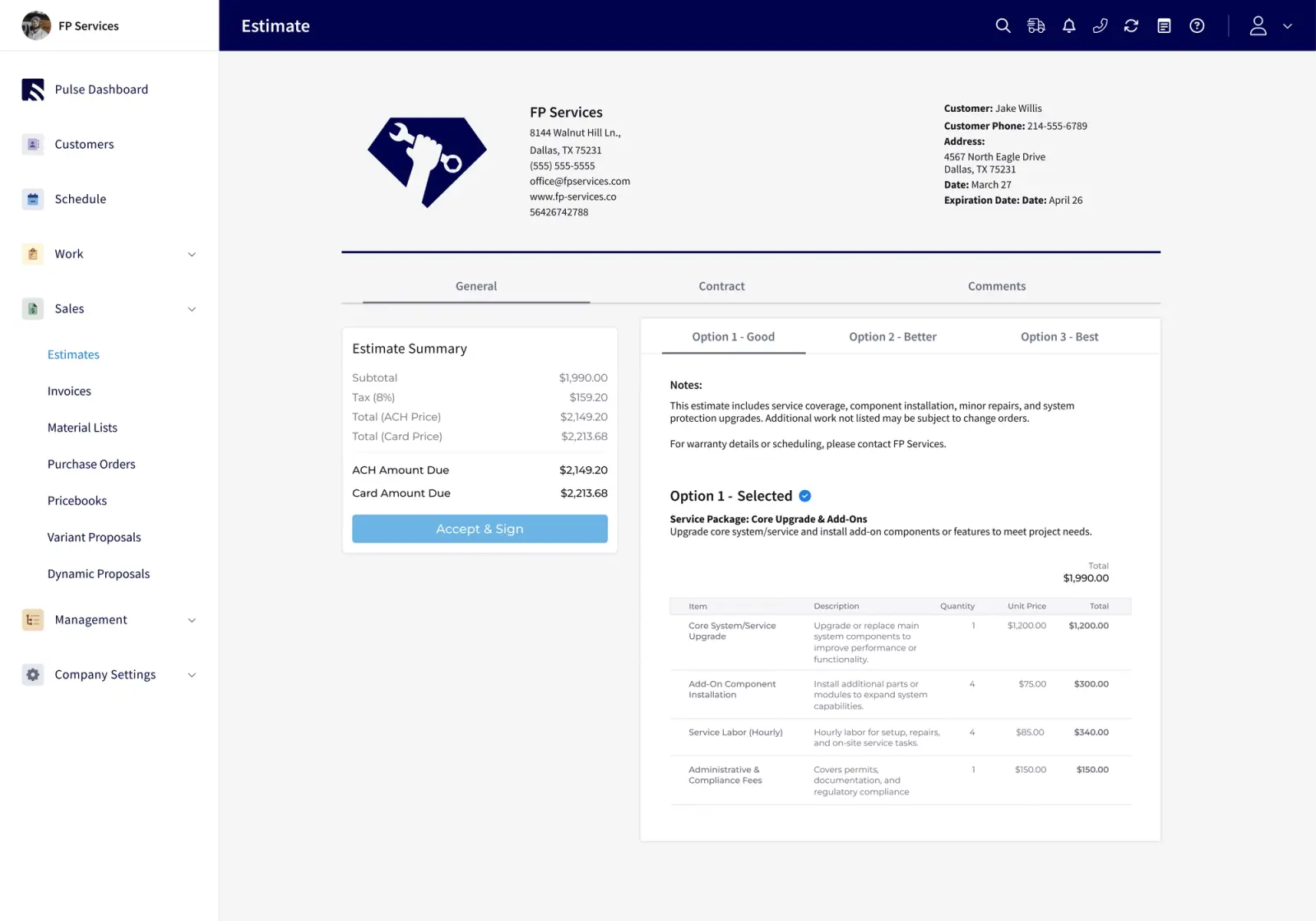
This approach separates guessing from pricing your next job with real numbers. HVAC contractors who run job costing on every ticket net 12–15% profit, versus 3–5% for those who do not. Clear patterns start to show within 60–90 days of consistent per-job tracking.
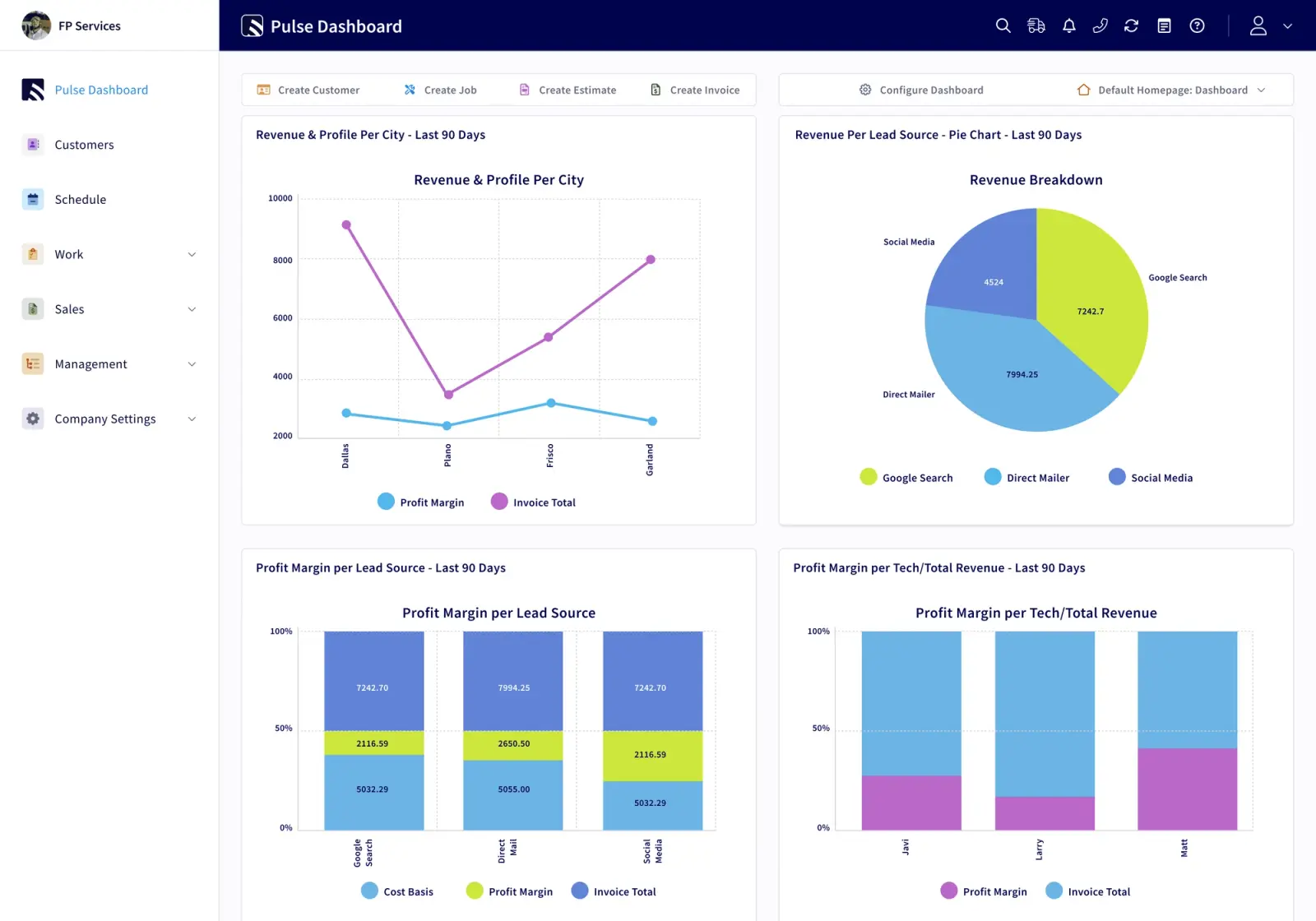
Small variances compound fast. If an $8,000 install takes 10 hours instead of 8, labor rises from $672 to $840, a $168 hit that drops the profit margin to 29%. Without an estimated-vs-actual view at closeout, that variance stays invisible until it has happened across many jobs.
See Estimated-Vs-Actual In A Live Demo
Change Orders: Where Profit Margin Disappears
Change orders are where HVAC profit margin disappears most quietly because the work gets done without being captured.
Here is what happens without a field change order process. Your tech discovers a damaged refrigerant line during an install. It needs to be rerouted. The customer is standing there, says “go ahead,” and the tech does the work. The office never sees it. The invoice goes out for the original scope. The extra labor and materials are absorbed as unbilled cost.
The fix is a field workflow that captures extra work at the moment it is discovered on the job record, with the customer’s authorization, before the work proceeds. Your tech needs a way to log the additional scope, price it from your standard pricebook, and get a signature without calling the office. That signed change order becomes a line item on the invoice. The work is billed. The profit margin is protected.
Does Job Costing Software Sync With QuickBooks?
Most field service software pushes invoices into QuickBooks and stops there. That setup creates a one-way sync. When your bookkeeper corrects something in QuickBooks, such as a customer name, an expense classification, or a line item, that fix gets overwritten the next time data moves from the field service software into the books.
A two-way sync means a correction made in QuickBooks carries back into the field service software. The two systems stay aligned. Your bookkeeper works in QuickBooks. Your dispatcher works in the field service software. Nobody keys the same invoice twice.
Ask every vendor this diagnostic question: “When your admin corrects something in QuickBooks Online, how does that fix get back into your field service software?” If the answer involves manual re-entry or a workaround, you are looking at a one-way sync.
FieldPulse syncs both ways with QuickBooks Online Essentials, Plus, and Advanced in the US, Canada, and Australia. What syncs in both directions includes customers and line items, estimates and invoices, payments, purchase orders with full line-item detail, and vendors. Timesheets flow into QuickBooks Online when a tech clocks out. Tax rates come from QuickBooks Online. Invoice numbering can follow your existing sequence. QuickBooks Desktop is also supported.
How To Choose Job Costing Software By Company Type
Now that you know what to look for in a sync, the next question is fit. Residential service work and multi-phase commercial installation have different job costing needs, and many vendor comparisons flatten that distinction.
Residential service and replacement needs job costing that ties a single-visit job to labor, parts, and refrigerant and closes out fast. The estimate becomes the baseline. The tech clocks in against the job. Materials land on the job record. The invoice goes out the same day. Change orders are captured in the field with a signature. The closeout comparison stays straightforward, estimated vs. actual, line by line.
Multi-phase commercial installation needs more. These jobs require progress billing against a schedule of values, retainage of 5–10% withheld by the general contractor until closeout, cost codes that roll up across phases and subcontractors, and change orders that re-baseline the approved scope instead of just adding a line to the invoice. On commercial work, unpriced field directives are the single most common way profit margin disappears.
FieldPulse supports commercial work. Its depth skews residential, and that deserves clear framing. If your business is primarily multi-phase commercial mechanical work with AIA billing and certified payroll, evaluate accordingly. If you are a residential HVAC shop with some commercial install in the mix, which describes most 7-to-50-technician shops, FieldPulse is built for your workflow.
The Shortlist: How FieldPulse Compares
FieldPulse is the strongest fit for HVAC job costing software in the 7-to-50-technician range. Here is what the product actually does.
ClearPath, included in the core platform, turns your process into office-defined job stages with required actions at each stage. Because your techs clock in against the job itself, not against a shift, labor hours tie to specific work instead of a weekly total. That setup makes job-level profitability visible.
Fair Comfort Solutions, an HVAC company, brought estimate creation from 4–8 hours per quote down to 4–8 minutes using the Pricebook with the pre-built Reece HVAC catalog. RDI, a commercial installation business, saw job-level profitability become visible for the first time in 50 years after implementing FieldPulse. They also cut time-to-invoice from 3 weeks to 5 days.
The platform’s job costing estimates your profit margin upfront and confirms actual profit after completion. You get per-job profit and loss plus line-item cost, price, and profit breakdowns by category. The Pricebook add-on holds standard pricing for services, materials, and labor so estimates stop varying by person. The two-way QuickBooks Online sync means a correction made in the books carries back into FieldPulse instead of being overwritten. Dashboards and reporting run on more than 60 prebuilt reports plus custom ones.
Those outcomes show up in the numbers customers report. FieldPulse holds a 4.8 out of 5 aggregate rating across G2, Capterra, the App Store, the Google Play Store, and other software-review sites. On average, customers report 25% gains in efficiency, with office teams saving 40+ hours per month, field teams seeing a 50% increase in on-time delivery, and businesses adding 16+ customers every month.
Tony Mackin of CSS Mechanical, an HVAC business, put it plainly: “We [came] from pen/paper and spreadsheets to FieldPulse so it [was] a big improvement and has given us visibility into our Business we didn’t have before, like profitability by customer.”
If you are evaluating other platforms, context on fit helps.
ServiceTitan is built for large, complex operations. If your shop is in the 7-to-50-technician range, the platform may be more than your operation requires. Enterprise complexity means multi-location corporate structures, deep integrations with enterprise accounting systems, and implementation timelines measured in months. The onboarding investment and per-technician cost reflect that scale.
Housecall Pro and Jobber are good starting points for smaller teams. As your workflows, inventory needs, accounting requirements, permissions structure, and job economics grow, you may reach a point where a simpler tool cannot carry them. When you need real job-level profitability, two-way QuickBooks sync, and field change order capture, you have likely reached that point.
Compare FieldPulse To Other Platforms In A Demo
Demo Checklist: Five Questions Before You Sign
Use these questions with every vendor you evaluate. The answers will tell you more than any feature list.
-
When your admin corrects something in QuickBooks Online, how does that fix get back into your field service software? A one-way sync will produce a workaround answer. A two-way sync will produce a direct one.
-
Show me a tech clocking in against a specific job and that time landing in job costing. If the demo shows weekly time entry rather than job-level clock-in, labor burden cannot attach to individual jobs.
-
Show me a change order captured in the field with a customer signature. If this requires a call to the office or a separate process, change orders will keep slipping through.
-
Show me the estimated-vs-actual comparison at closeout, line by line. The sold bid has to be the baseline. If the platform cannot show you that comparison by cost category, you cannot price the next job with real numbers.
-
What happens to the tech’s workflow when the signal drops? A platform that only works with full signal will strand your techs in basements and rural service areas. Ask to see the offline workflow, not just the online one.
For that last question, FieldPulse offers helpful offline behavior. The past week of jobs, projects, customers, estimates, and invoices ride along on the device. Your techs can add unlimited job notes, upload up to 50 photos at a time, update statuses, and clock in and out.
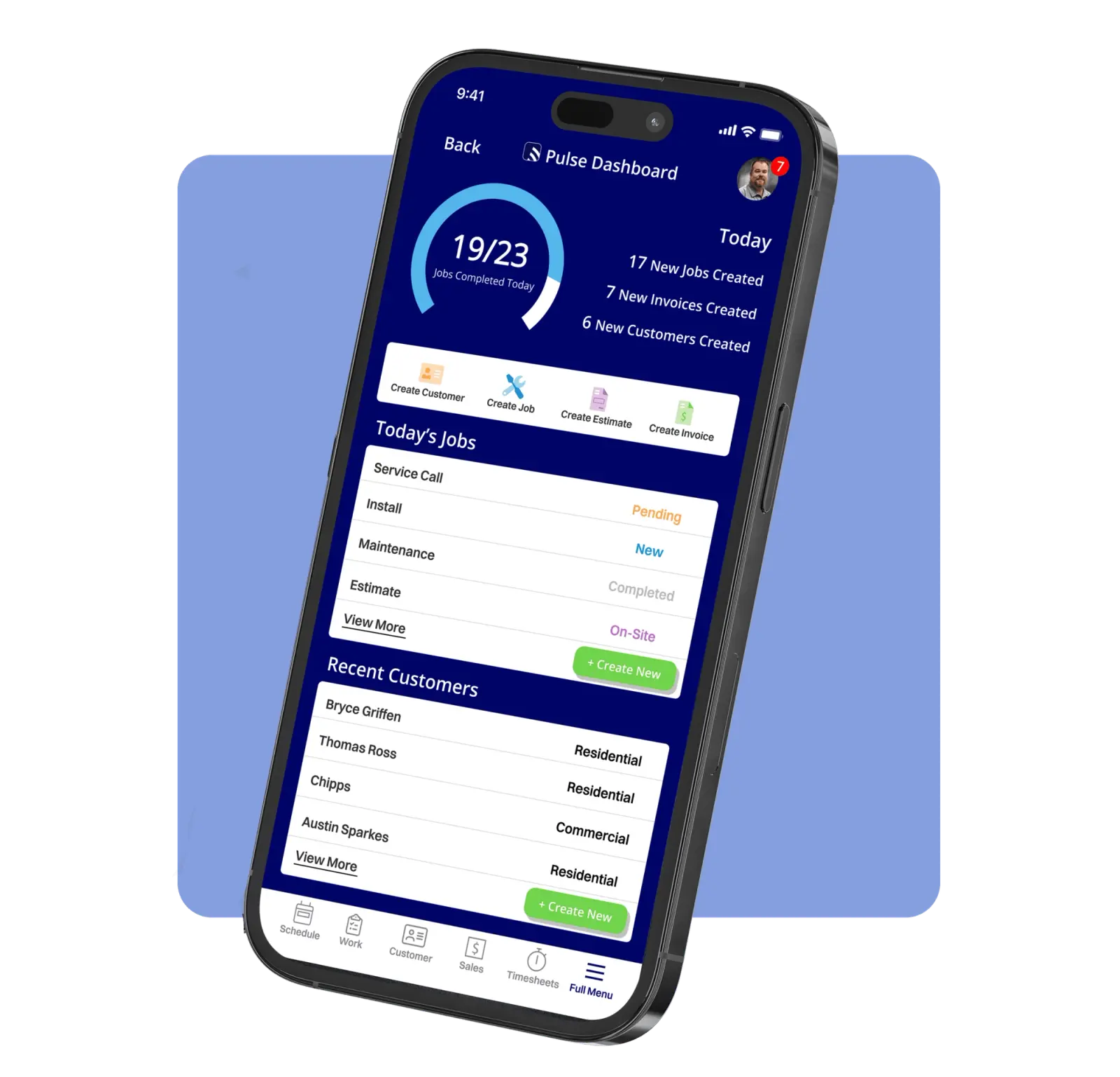
If signal drops mid-edit, the active draft transitions automatically to an offline draft. Everything entered offline saves locally and syncs when the device is back in signal. This matters in basements, rural service areas, and mechanical rooms where connectivity is unreliable. Your techs can complete a majority of the job without cell signal and nothing gets lost.
If your office administrator will live with this decision day to day, bring them into the demo. Let them see what happens to duplicate entry when the books and the field service software finally agree. The two-way QuickBooks sync often becomes the turning point for the person who keeps the books.
Find out where your admin workload is heaviest with the three-minute Admin Workload Assessment.
Frequently Asked Questions
What Is Job Costing In HVAC?
As covered above, job costing tracks every dollar of cost against a specific job and compares that total to the revenue the job generated. The key point for HVAC teams is that a weekly labor total does not count as job costing. Labor hours have to attach to the job itself for the comparison to mean anything.
How Does Labor Burden Get Applied To An HVAC Job?
Labor burden covers the cost of employing a tech beyond base wage, including taxes, insurance, benefits, vehicle, tools, and training. You apply it by multiplying job-level hours by the tech’s fully burdened rate. That burdened cost then flows into the job’s profitability calculation alongside materials, equipment, and overhead.
Does Job Costing Software Sync With QuickBooks?
Sync behavior depends on the platform. Many tools offer a one-way sync that pushes invoices into QuickBooks but does not bring corrections back. A two-way sync keeps both systems aligned because a correction made in QuickBooks carries back into the field service software. FieldPulse syncs both ways with QuickBooks Online Essentials, Plus, and Advanced in the US, Canada, and Australia.
What Is The Best Software For HVAC Estimating?
The best HVAC estimating software connects the estimate to job costing so the sold bid becomes the baseline at closeout. You can then see estimated vs. actual, line by line. FieldPulse’s Pricebook add-on holds standard pricing for services, materials, and labor, with pre-built supplier catalogs like the Reece HVAC pricebook. Estimates are built in minutes from preset pricing, including good-better-best equipment options, and convert directly to invoices without re-entry.
Is There Free HVAC Job Costing Software?
Free tools can track time and expenses, yet they rarely tie labor to a specific job, produce per-job profit and loss, or sync both ways with your accounting system. A spreadsheet can record what you spent. It cannot show you whether the job you just closed made money or why the profit margin came in well below the sold bid. That comparison requires labor hours attached to the job, materials and equipment on the job record, and an estimated-vs-actual view at closeout.
How Long Does Implementation Take?
Most HVAC teams complete implementation in two to six weeks. Timing depends on your team size, which capabilities you enable, how much data needs to migrate, and how your accounting setup is handled. An implementation manager runs recurring working sessions with you.
The work usually follows three phases: configure the foundation, move data and connect QuickBooks Online, and train each role. Tasks between sessions give your team time to practice before the next one. RDI described their approach as “ripping band-aids off one at a time, instead of all at once,” which works well for many shops.
Conclusion And Next Steps
The decision framework comes down to a few connected needs. Start with labor. Hours have to attach to specific jobs instead of weekly totals, or every job appears to absorb labor equally.
From there, materials, equipment, and refrigerant need to land on the job record so the cost side is complete. Change orders must be captured in the field with authorization before the work proceeds because that is where profit margin disappears most quietly.
With those in place, the sold bid becomes a meaningful baseline at closeout. Finally, the QuickBooks sync needs to work both ways so a correction made in the books does not get overwritten.
Before you sign anything, take a short pass through your own process. Document your current workflow for one job type. Cost out one real job from last month using fully burdened labor rates. Gather input from your office manager and one tech. Test each platform against the five demo checklist questions above. The answers will show you which platform actually supports your workflow.
FieldPulse connects your office and your field on one workflow, including job costing, ClearPath-guided execution, two-way QuickBooks sync, and field change order capture, all in one platform built for teams in the 7-to-50-technician range.
Talk Through Job Costing In A FieldPulse Demo